 Go Back

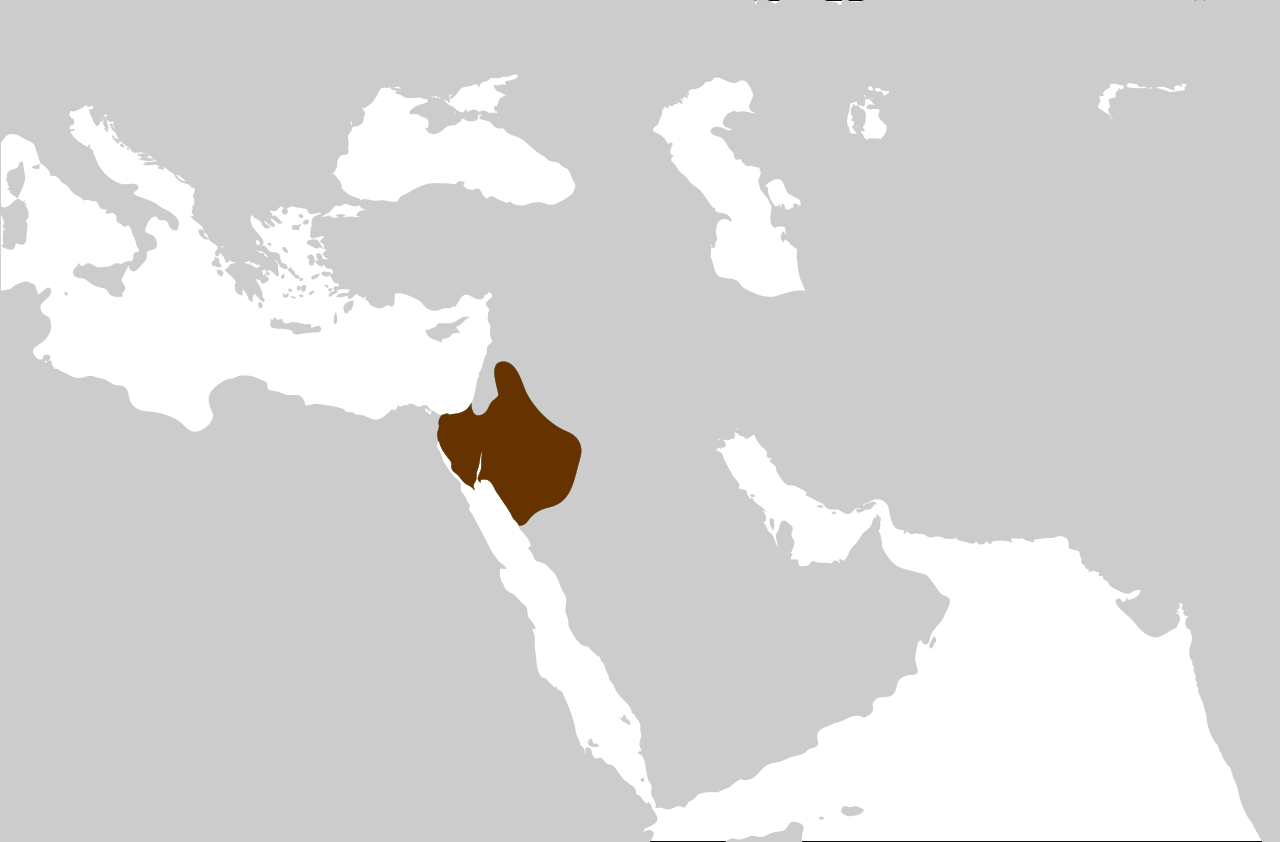
The Nabataean Kingdom. The Nabataeans were an Arab people who began as nomads of the Arabian desert and built, by the mid-3rd century BCE, one of the most remarkable trading kingdoms of the ancient world. From their rock-carved capital at Petra, with the cities of Hegra (Mada'in Salih) in the Hejaz and Bosra in the north, they controlled the caravan routes that carried frankincense, myrrh, and spices from southern Arabia to the Mediterranean port of Gaza - and grew fabulously rich on the tolls. Their language was Arabic, their official script Aramaic, and their kingdom stretched at its zenith from the Hejaz to Damascus, which they held from 85 to 71 BCE.
Their secret was water. Greek writers marveled that the Nabataeans survived in a waterless desert by digging hidden cisterns marked with signs only they could read, vanishing into the sands while invading armies died of thirst - a trick they used to annihilate the 4,000-strong raiding force the Macedonian general Antigonus sent against their rock stronghold in 312 BCE. Diodorus recorded that 'neither the Assyrians of old, nor the kings of the Medes and Persians, nor yet those of the Macedonians have been able to enslave them.'
By the 1st century BCE the kingdom was a power to be courted and feared: King Obodas I crushed the Hasmonean king Alexander Jannaeus at Gadara in 93 BCE and slew the Seleucid king Antiochus XII in battle at Cana in 84, and was worshipped as a god after his death; under Aretas III and Aretas IV the realm reached its territorial and commercial zenith. But Rome was closing in: in 62 BCE Aretas III paid tribute to a Roman army at the gates of Petra, and the kingdom survived another century and a half as a wealthy Roman client state.
The end came quietly: in 106 CE the emperor Trajan annexed the kingdom as the province of Arabia Petraea, and the caravan trade that had made the Nabataeans rich gradually shifted to other routes. Their legacy is written in stone - the treasury and tombs of Petra, carved whole from rose-red cliffs, and the waterworks that made a desert bloom - and in their script, which over the following centuries evolved into the Arabic alphabet used across the world today.
 Britannica: Nabataean
 Humanities LibreTexts: 2.6: Nabataean
 Livius: Nabataeans - Livius
 The Metropolitan Museum of Art: Nabataean Kingdom and Petra