 Go Back

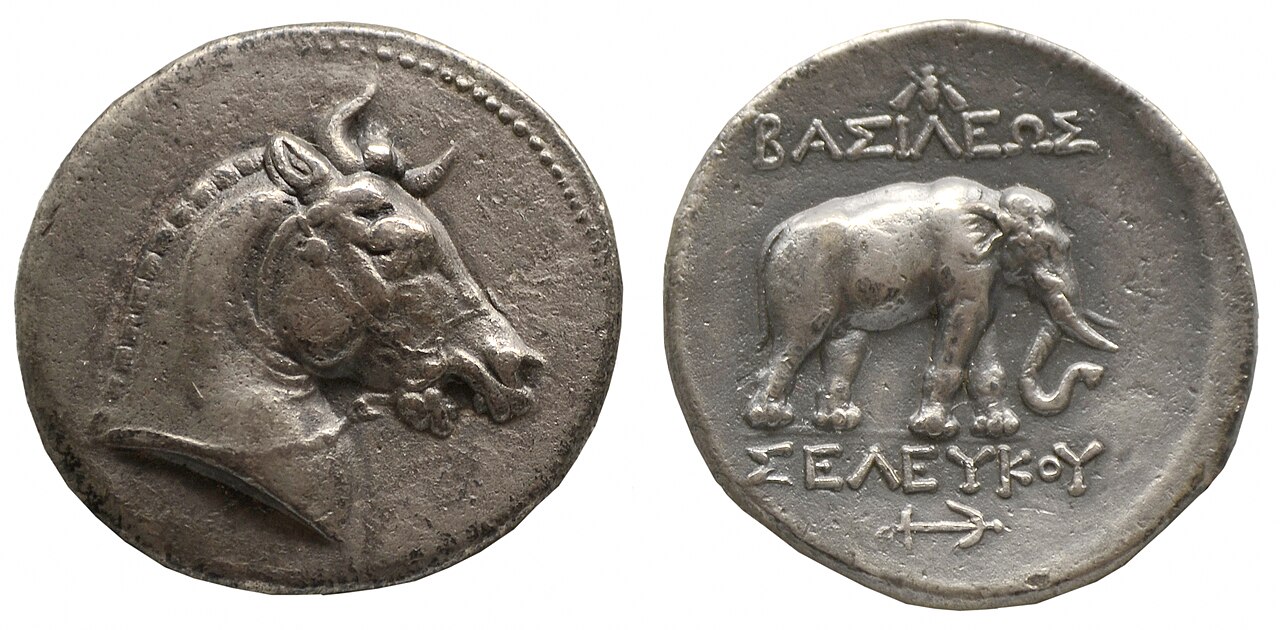
The Seleucids. The Seleucid Empire was the great Greek successor state of Alexander the Great's conquests in Asia, founded in 312 BCE by Seleucus I Nicator, one of Alexander's generals, amid the Wars of the Diadochi that tore the dead conqueror's empire apart. From Babylonia, which he received in the partition of 321 and had to retake by force in 312, Seleucus built a realm stretching at its height from Anatolia to Central Asia and the borders of India - nearly four million square kilometers and over thirty million people. Victory at Ipsus in 301 BCE secured his Asian empire, ruled from the new cities he founded: Seleucia on the Tigris, then Antioch in Syria.
The empire was the heartland of Hellenistic civilization: Greek was the official language, Greek settlers filled scores of new cities named for kings and queens, and an urban Greek elite formed the ruling class, while local traditions - Babylonian, Persian, Jewish - were generally tolerated beneath. Yet the empire faced both ways and strained at both ends. In the east, war with Chandragupta Maurya of India ended in 305 BCE with the cession of Alexander's Indus territories in exchange for alliance and war elephants; in the west, generations of Syrian Wars with Ptolemaic Egypt bled the kingdom for control of the Levant.
The turning point came with Antiochus III the Great, who restored much of the empire's former reach but then marched into Greece and collided with Rome: defeated at Magnesia in 190 BCE, the Seleucids surrendered all lands west of the Taurus Mountains and paid crushing reparations. Worse, his successor Antiochus IV's attempt to force Greek customs on Judea provoked the Maccabean Revolt of 167 BCE, and while the kingdom was distracted, Mithridates I of Parthia swallowed its eastern heartlands, taking Babylon itself between 141 and 129 BCE, while the Greco-Bactrian kingdom flourished on its own in the northeast.
Reduced by civil wars to a rump state in Syria, the once-great kingdom ended not with a bang but a signature: Tigranes the Great of Armenia took what was left in 83 BCE, and when the Roman general Pompey arrived in 63 BCE he simply annexed the remnants as the province of Syria. The Seleucid world outlived its dynasty, though - its Greek cities, its language, and its blend of Greek and Eastern cultures remained the fabric of the Near East for centuries, the world into which Rome stepped and in which much of later history would be written.
 World History Encyclopedia: Seleucid Empire
 Encyclopaedia Iranica: SELEUCID EMPIRE
 Livius: Seleucids - Livius
 The Metropolitan Museum of Art: The Seleucid Empire (323–64 B.C.)