 Go Back

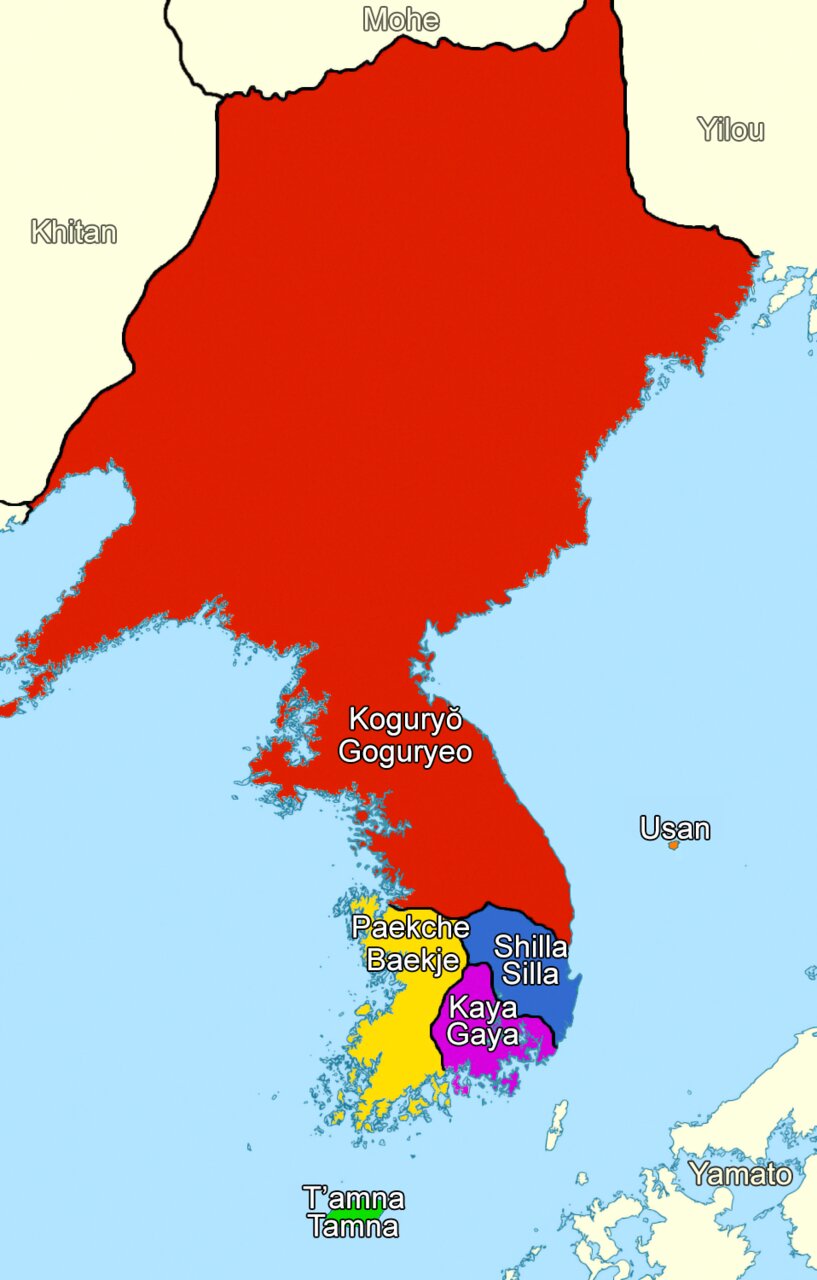
The Three Kingdoms of Korea. The Three Kingdoms period (traditionally 57 BCE-668 CE) shaped the Korean nation. Three rival states divided the peninsula: Goguryeo, a warlike kingdom of horsemen in the northern mountains and Manchuria; Baekje in the southwest, a maritime power with close ties to Japan; and Silla in the southeast, the most isolated and conservative of the three. A small confederation, Gaya, held the southern tip between Baekje and Silla until Silla absorbed it in 562.
The 4th and 5th centuries were Goguryeo's age of glory: its king Gwanggaeto the Great (r. 391-413) - whose giant inscribed stele still stands in Manchuria - conquered deep into Manchuria and south down the peninsula. All three kingdoms adopted Chinese writing, administration and Buddhism (Goguryeo 372, Baekje 384, Silla 527), building a cultured aristocratic civilization of walled cities, gilded temples and tombs filled with gold crowns and murals of the four directional guardians. Baekje in turn passed writing, crafts and Buddhism to the early Japanese court.
From the 6th century Silla rose, fighting a long duel with Goguryeo for the peninsula's center. The decisive turn was diplomatic: Silla allied with Tang China, and the allies destroyed Baekje (660) and then Goguryeo (668) - which had famously beaten off massive invasions by the Sui dynasty decades earlier. Silla then expelled its own Tang allies from the peninsula by 676, ruling a unified Korea south of the Taedong River.
Unified Silla's centuries of peace, with its capital at Gyeongju - 'the museum without walls' - saw the flowering of Buddhist art at Bulguksa and the Seokguram grotto. The Three Kingdoms era had defined Korea's language, territory, Buddhism and identity: later Koreans looked back to these kingdoms, especially Goguryeo, as the wellsprings of the nation.
 Britannica: Korea
 World History Encyclopedia: Three Kingdoms Period in Korea
World History Encyclopedia: Samguk Sagi