 Go Back

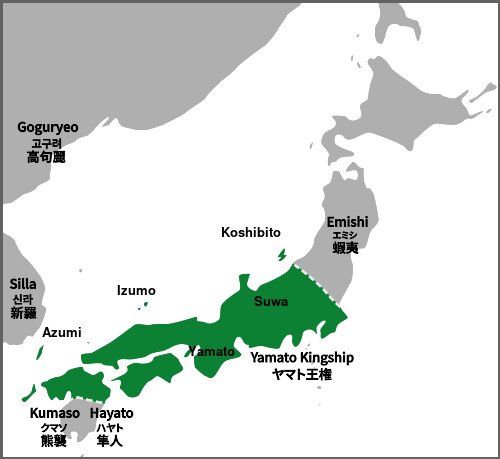
The Yamato and Kofun Periods. The Kofun ('old tomb') period (c. 250-538 CE) takes its name from the gigantic keyhole-shaped burial mounds raised for Japan's rulers - the largest, the Daisenryo mound near Osaka traditionally assigned to Emperor Nintoku, is one of the biggest tombs in the world, ringed by moats and guarded by thousands of haniwa clay figures of warriors, horses and houses. These monuments mark the rise of the Yamato court in central Japan, the dynasty that still occupies the Japanese throne.
The Yamato kings (uji no kami, later tenno) were first among the chieftains of a loose confederation of clans (uji), each with its own lands, gods and crafts. Power rested on control of rice land, iron, and the 'be' groups of hereditary artisans - weavers, smiths, scribes and horsemen, many of them immigrants from Korea and China. Iron tools and weapons transformed agriculture and war, and mounted warriors in the 5th century strengthened the court's grip.
Yamato Japan was in constant contact with the mainland: the 'Five Kings of Wa' sent embassies to Chinese courts in the 5th century and received titles from them, while armies intervened in the wars of the Korean kingdoms and maintained a foothold at Mimana (Gaya). From Korea came writing, iron technology, and eventually, in 538 or 552 CE, a gift of Buddhist images and sutras from the king of Baekje - the arrival of Buddhism, conventionally ending the Kofun and opening the Asuka period.
In the 7th century the Yamato court reorganized itself on Chinese models - the Taika Reforms of 645, the ritsuryo codes, and the first permanent capital at Nara (710) - transforming a confederation of clans into a centralized imperial state. The kofun themselves remain the period's great witnesses: still unexcavated out of respect for the imperial ancestors, their haniwa and grave goods preserve the look of Japan's first kingdom.
 Britannica: Tumulus period
 World History Encyclopedia: Kofun Period
 The Metropolitan Museum of Art: Kofun Period (ca. 300-710)