 Go Back

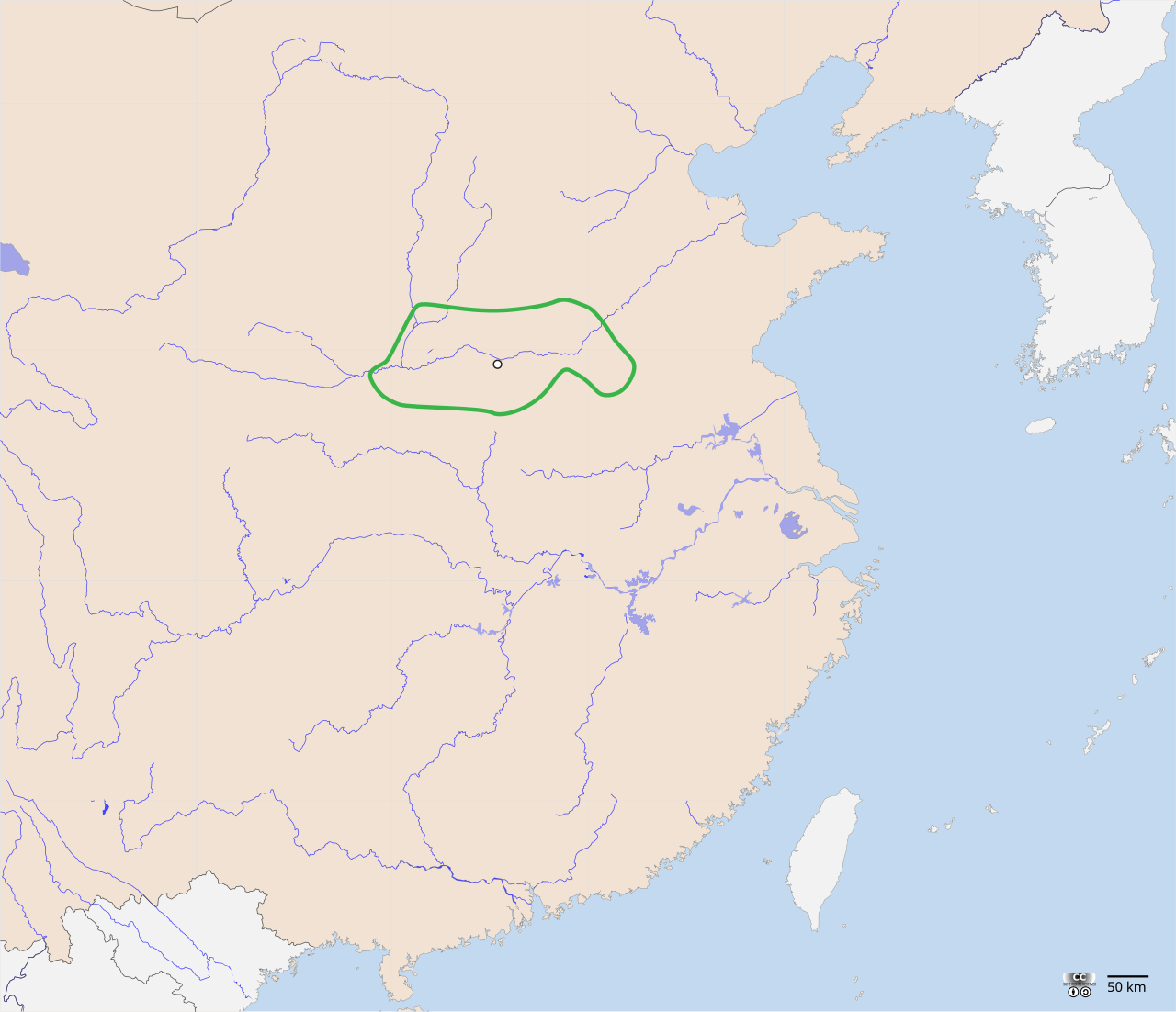
Xia Dynasty. The Xia dynasty (c. 2070-1600 BCE, by the conventional chronology) holds a unique place in Chinese history: it is the first dynasty of traditional Chinese historiography - and it may never have existed at all. The story as the Han historian Sima Qian and earlier classics tell it is a founding epic: when the Yellow River flooded catastrophically, the hero Yu the Great spent thirteen years taming the waters, digging channels to lead them to the sea, passing his own home three times without stopping. For this service the throne passed to him, and Yu founded the Xia - the first hereditary dynasty, replacing the age of sage-emperors who had chosen worthy successors.
The problem is evidence. There are no contemporaneous written records of the Xia; the oldest Chinese writing, the Shang dynasty's oracle bones, never mentions them. The earliest mentions come in Zhou dynasty texts, centuries later - and those texts had an agenda, using the story of the Shang righteously replacing a corrupt Xia to justify their own replacement of the Shang. The traditional king list runs through seventeen rulers, ending with the tyrant Jie, whose cruelty - the story goes - cost the dynasty the Mandate of Heaven and let Tang of Shang overthrow it at the Battle of Mingtiao.
Whether the Xia was history, legend, or something in between is one of Chinese archaeology's great open questions. Most Chinese archaeologists identify the Xia with the Erlitou culture (c. 1900-1500 BCE), whose excavated capital in Henan - with palace foundations, bronze workshops, and elite burials - was China's first state-level society, in the right place at roughly the right time. Many Western scholars remain unconvinced, noting that no Erlitou inscription names the Xia. The honest summary: a kingdom matching the traditional Xia in time and place existed; whether its people called themselves Xia is unknown.
Legend or not, the Xia matters enormously, because it created the template of Chinese political legitimacy. The dynastic cycle - a virtuous founder, generations of decline, a corrupt last ruler who forfeits heaven's mandate, a righteous replacement - was constructed around the Xia-Shang-Zhou succession and governed how every later dynasty explained itself. China's story about where its civilization began begins with Yu and the flood, and that story shaped Chinese identity for two thousand years.
 Britannica: Xia dynasty
 World History Encyclopedia: Xia Dynasty
 Humanities LibreTexts: 5.11: The Xia Dynasty
 The Metropolitan Museum of Art: China, 2000–1000 B.C.