 Go Back

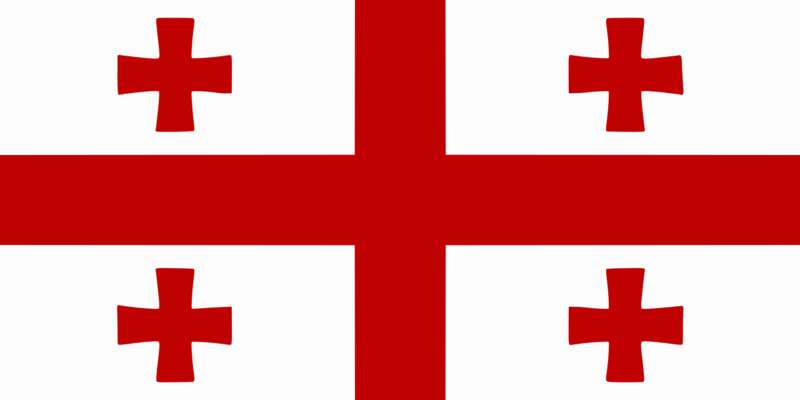
Kingdom of Georgia. The Kingdom of Georgia (c. 1008-1490) was the great Christian power of the Caucasus - a mountain kingdom that, for one shining century, dominated the whole region from the Black Sea to the borders of Iran. It was born in 1008, when Bagrat III of the Bagrationi dynasty inherited the thrones of Abkhazia and Iberia and united the Georgian lands under one crown for the first time, after centuries of division between rival kingdoms and Arab and Byzantine overlords.
The kingdom's first century was a struggle for survival: wars with Byzantium under Basil II cost Georgia its western lands, and from the 1060s the Seljuk Turks overran much of the country. Salvation came with David IV, 'the Builder' (r. 1089-1125), who crushed the feudal lords, stopped paying tribute to the Seljuks, and rebuilt the army with Kipchak steppe warriors settled in exchange for service. In 1121, when the Muslim powers of the region declared holy war, David destroyed their coalition at the Battle of Didgori - the victory that ended Turkish hegemony in the Caucasus. He took Tbilisi the same year and made it his capital, pushed on to capture Ani and Shirvan, and founded the Gelati Academy, famed in its day as 'a new Hellas'.
The Golden Age crowned by his great-granddaughter, Queen Tamar (r. 1184-1213) - who ruled in her own right with the royal title 'King of Kings' - made Georgia the pre-eminent state of the Christian East, its tributaries stretching from eastern Europe to Anatolia and the northern frontiers of Iran. Tamar not only shielded her empire from Turkish invasion but crushed internal revolts, including two by her own former husband. In 1204, as the Crusaders sacked Constantinople, her armies founded the Empire of Trebizond on the Black Sea as a friendly Georgian-backed Byzantine successor state, and Georgia's wealth endowed monasteries from Bulgaria to Jerusalem.
The Mongols broke it. The invasions of the 13th century reduced Georgia to vassalage, and though George V 'the Brilliant' expelled the Mongol garrisons and restored its sovereignty and prosperity by the 1340s, the Black Death - said to have carried off half the population - and then Timur's devastating invasions at the century's end ruined the land. Isolated by the Ottoman conquest of Byzantium and Trebizond, the kingdom fractured into the rival kingdoms of Kartli, Kakheti, and Imereti by 1490. Georgia's golden century was over - but the memory of David and Tamar has anchored Georgian national identity ever since.
 Britannica: Iberia
 World History Encyclopedia: Tamar of Georgia
 UNESCO: "Description of Georgian Kingdom" and the Geographical Atlas of Vakhushti Bagrationi (Memory of the World nomination)
 Encyclopaedia Iranica: BAGRATIDS