 Go Back

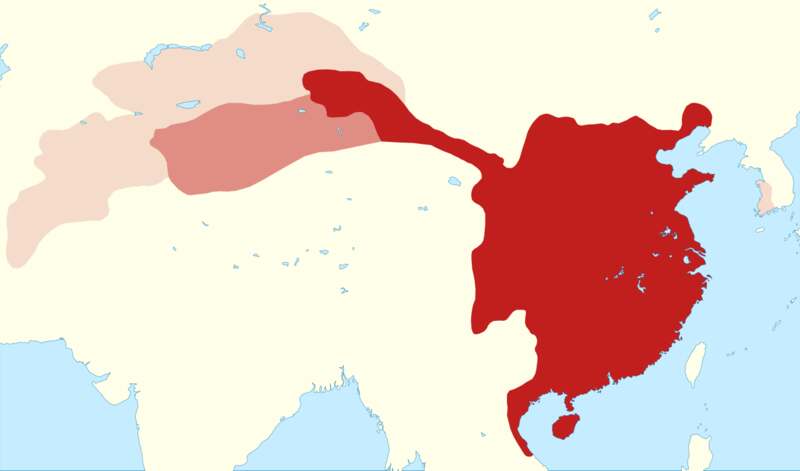
The Tang Dynasty. The Tang dynasty (618-907) is remembered as China's golden age - a high point of Chinese civilization when the empire was the largest, richest, and most cosmopolitan state on earth. The dynasty was founded in 618 by Li Yuan, Duke of Tang, out of the collapse of the short-lived Sui; under his son Taizong (r. 626-649) - who seized the throne in the Xuanwu Gate Incident - and a succession of strong emperors, Tang armies pushed deeper into Inner Asia than even the Han had done, garrisoning the Silk Road and drawing tribute from kingdoms across Asia.
The Tang capital Chang'an (modern Xi'an) was for much of the dynasty the most populous city in the world - a true metropolis where Persian merchants, Sogdian traders, Nestorian Christians, Manichaeans, Zoroastrians, and Muslims all worshipped and traded. The empire's population grew from some 50 million to an estimated 80 million. Tang government was run by scholar-officials recruited through standardized examinations, and Tang culture was the school of East Asia: Japan and Korea drew deeply on its culture, institutions, and letters.
It was also the greatest age of Chinese poetry - Li Bai and Du Fu, the two most famous poets in Chinese history, were Tang men - and the age that saw woodblock printing develop, while Buddhism reached its Chinese peak before Emperor Wuzong's suppression in the 840s. Between 690 and 705 the dynasty was even interrupted by Wu Zetian, the only woman in Chinese history to rule as emperor in her own name.
The turning point was the An Lushan rebellion (755-763), which devastated the north and permanently weakened the throne. Real power drained to the jiedushi, the regional military governors; agrarian rebellions tore the 9th century apart; and in 907 the last Tang emperor abdicated, opening the half-century of division known as the Five Dynasties and Ten Kingdoms. But the Tang ideal - a unified, examination-governed, culturally confident China - became the standard every later dynasty measured itself against.
 Britannica: Tang dynasty
 World History Encyclopedia: Tang Dynasty
 Humanities LibreTexts: 7.4: Tang Dynasty (618 CE – 906 CE)
 Smarthistory: Tang dynasty (618–907), an introduction