 Go Back

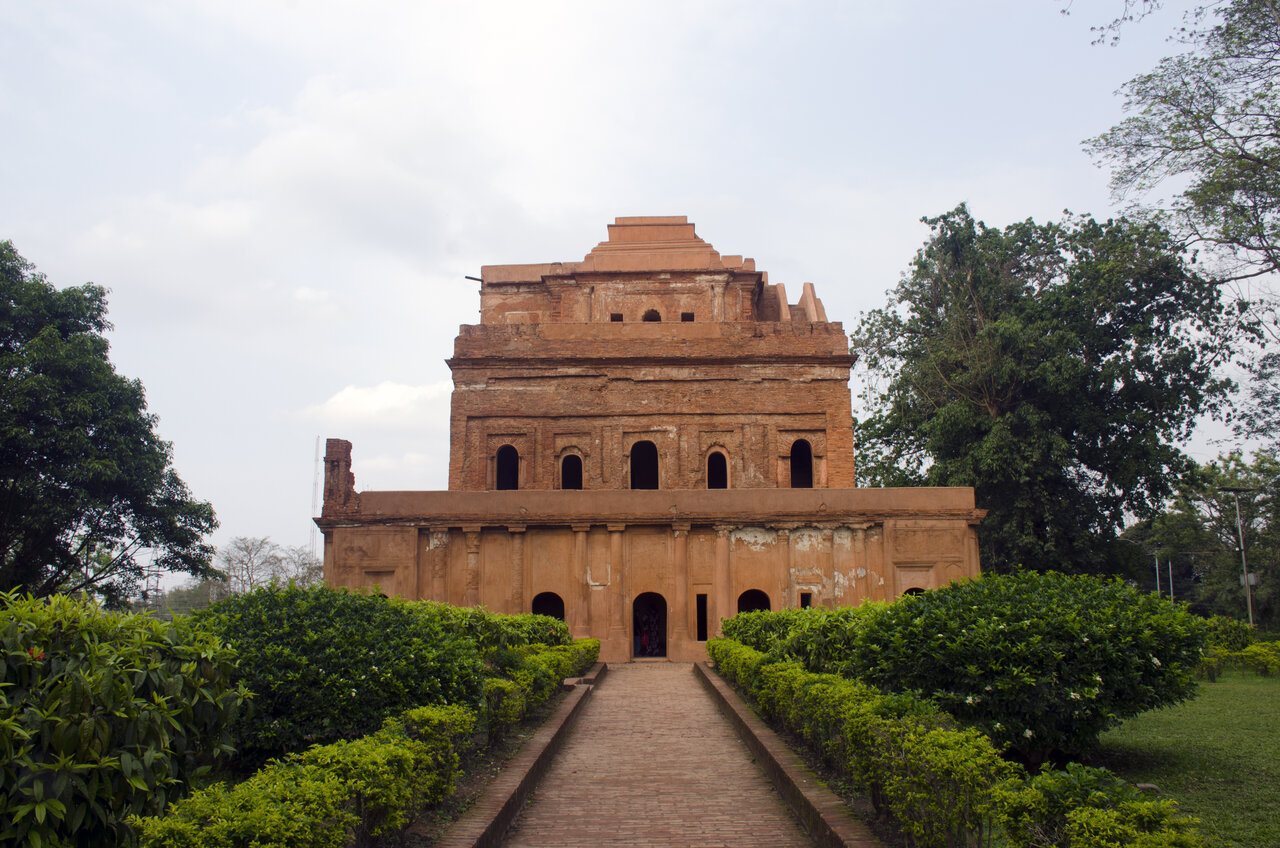
The Ahom Kingdom. The Ahom Kingdom (1228-1826) ruled the Brahmaputra valley of Assam for six hundred years - one of the longest-lived dynasties in Indian history. Its founder, Sukaphaa, a Shan (Tai) prince from Mong Mao on the China-Burma border, crossed the Patkai mountains in 1228 with a small following, subdued and absorbed the local Barahi and Moran peoples, and planted a Tai state whose kings, administration (the paik labor system) and wet-rice agriculture organized the whole valley.
The Ahoms' defining struggle was with Mughal India. Through the 17th century Mughal armies repeatedly invaded the valley, and repeatedly failed: the climactic battle of Saraighat (1671), where the Ahom general Lachit Borphukan's river-fleet destroyed a huge Mughal flotilla on the Brahmaputra, fixed India's northeast frontier for a century and made Lachit Assam's eternal hero. The Ahoms also absorbed the powerful Neo-Vaishnavite reform movement of Sankardev, whose satra monasteries reshaped Assamese religion, language and literature under royal patronage.
Ahom Assam kept extraordinary records: the buranjis, chronicles written in the Ahom and later Assamese language on bark and aloe-bark paper, are among the finest historical traditions of premodern India. The kingdom's capital moved from Charaideo (whose pyramid-like royal tombs, the maidams, are a UNESCO site) to Gargaon and Rangpur, and its economy on wet rice, silk (muga), and the paik system of universal service.
In the late 18th century the devastating Moamoria rebellions of the Mayamara sect broke the kingdom's strength; civil war brought Burmese invasions (1817-1826) that depopulated the valley, and in 1826 the British East India Company took Assam from Burma by the Treaty of Yandabo. The Ahoms left modern Assam its name (from 'Asam/Ahom'), its language's chronicles, and its distinct identity within India.
 Britannica: Assam
Britannica: Ahom
Britannica: Sivasagar