 Go Back

The Ashikaga Shogunate. The Ashikaga (or Muromachi) shogunate (1336-1573) was Japan's second warrior government, founded when Ashikaga Takauji turned on the emperor Go-Daigo's short-lived imperial restoration and seized Kyoto. For its first sixty years Japan had two rival courts - the Ashikaga-backed Northern Court in Kyoto and the exiled Southern Court in the Yoshino mountains - until the shogun Yoshimitsu, the regime's greatest figure, reunified them in 1392.
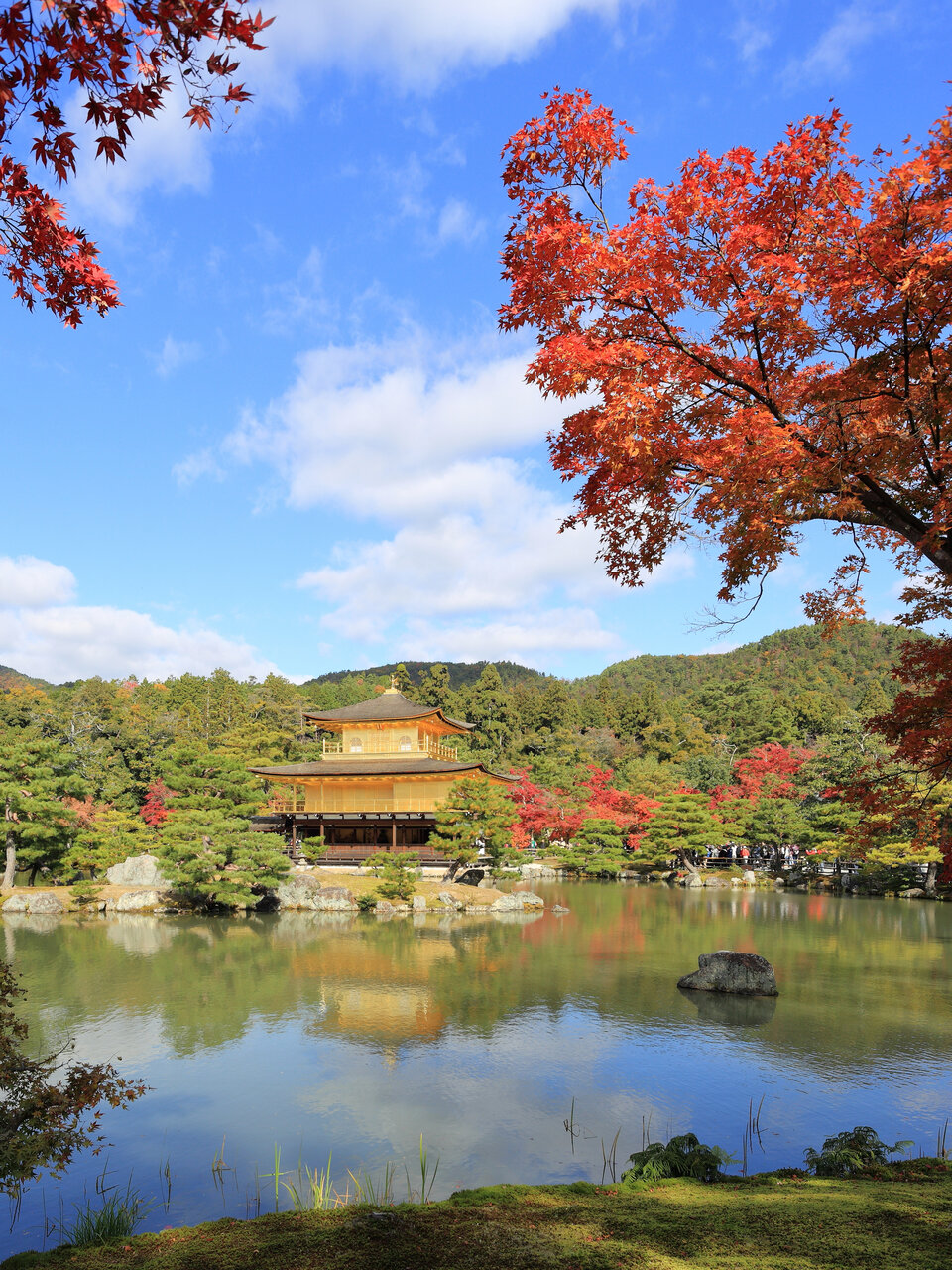
Yoshimitsu (shogun 1368-1394, de facto ruler to 1408) made the shogunate splendid: he subdued the great provincial lords (shugo daimyo), reopened formal tribute trade with Ming China, accepting investiture as 'King of Japan', and built the Golden Pavilion (Kinkaku-ji), the gilded retreat that still symbolizes the age. Under Ashikaga patronage the Zen-linked arts that define classical Japanese culture matured: Noh theater under Zeami, the tea ceremony, ink landscape painting by monks like Sesshu, dry-landscape Zen gardens like Ryoan-ji, and the linked-verse poetry of the salons.
Politically the shoguns were never masters of Japan. Real power lay with the shugo daimyo, who turned their provinces into hereditary domains, and with quarreling court factions; the shogunate's finances depended on taxing trade, temples and moneylenders. The system collapsed into the catastrophic Onin War (1467-1477) - a succession dispute that burned Kyoto to ashes and broke central authority altogether.
For the next century the Ashikaga shoguns were puppets and fugitives while the daimyo fought the Sengoku wars. In 1573 the last shogun, Yoshiaki, was driven from Kyoto by Oda Nobunaga, formally ending the shogunate. Its legacy is cultural: the aesthetics of Zen - spare, asymmetrical, refined - that the world now reads as quintessentially Japanese are largely the creation of the Muromachi age.
 Britannica: Muromachi period
 World History Encyclopedia: Muromachi Period
 The Metropolitan Museum of Art: Muromachi Period (1392-1573)