 Go Back

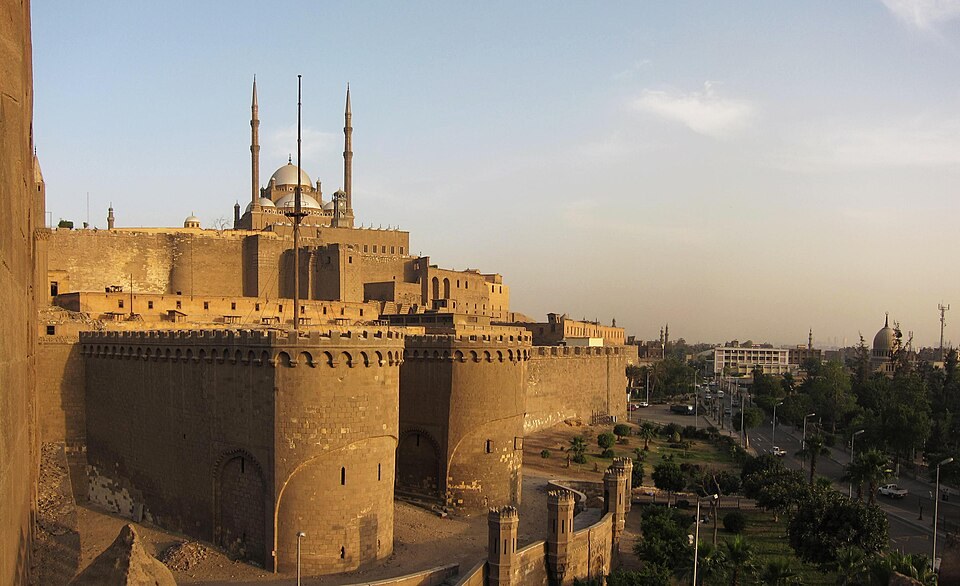
The Ayyubid Sultanate (1171-1250) was the Kurdish dynasty that turned Egypt into the sword-arm of the counter-crusade. Its founder was Salah al-Din Yusuf ibn Ayyub - Saladin to the West - whose father Ayyub and uncle Shirkuh were Kurdish soldiers of fortune from Dvin in Armenia who rose in service to the Zengid rulers of Syria. When Shirkuh's armies marched into a Fatimid Egypt torn by palace intrigue, his nephew went with them, and in 1169 Saladin became vizier to the last Fatimid caliph while commanding the Syrian army of occupation.
In 1171 Saladin quietly ended two centuries of Shi'a Fatimid rule, restoring Egypt to Sunni Islam and the Abbasid caliph in Baghdad; when his old master Nur al-Din died in 1174, he took Damascus and gathered Muslim Syria around him. Then came the confrontation that made his name: at Hattin in 1187 he destroyed the army of the Kingdom of Jerusalem and retook the city itself, ending 88 years of crusader rule. The Third Crusade answered, Richard the Lionheart clawed back the coast, but the Treaty of Jaffa in 1192 left Jerusalem Muslim - and Saladin's restraint in victory made him the medieval world's model of chivalrous kingship.
The sultanate did not remain one man's empire for long. Saladin had divided his lands among his sons and his brother al-Adil, and after his death in 1193 the dynasty became a family federation of princes in Cairo, Damascus, Aleppo, Hama, Homs and the Jazira. Al-Adil (r. 1200-1218) mastered it by placing the great appanages in the hands of his own sons; his son al-Kamil (r. 1218-1238) survived the Fifth Crusade's siege of Damietta and in 1229 peacefully ceded Jerusalem to Emperor Frederick II. When al-Kamil died the family wars resumed, until al-Salih Ayyub (r. 1240-1249) began wrenching Egypt into a centralized state run not by kinsmen but by his own slave-soldiers, the Bahri mamluks.
It was those mamluks who buried the dynasty. When al-Salih died in 1249, within a year his Bahri regiment had murdered his son Turanshah and seized the throne. The Syrian branches fell to the Mongols in 1260 and were absorbed into the Mamluk Sultanate, though Ayyubid princes lingered in Hama until 1341 and, under Mongol and Turkmen overlords, in little Hisn Kayfa until 1462. The dynasty's legacy outlasted its politics: the madrasas it planted in Egypt and Jerusalem, the Citadel of Cairo, the defenses of Aleppo - and the memory of Saladin, for eight centuries the benchmark of Muslim kingship.
 Britannica: The Ayyubid Dynasty
 World History Encyclopedia: Saladin
 Encyclopaedia Iranica: The Ayyubids
 The Metropolitan Museum of Art: The Art of the Ayyubid Period