 Go Back

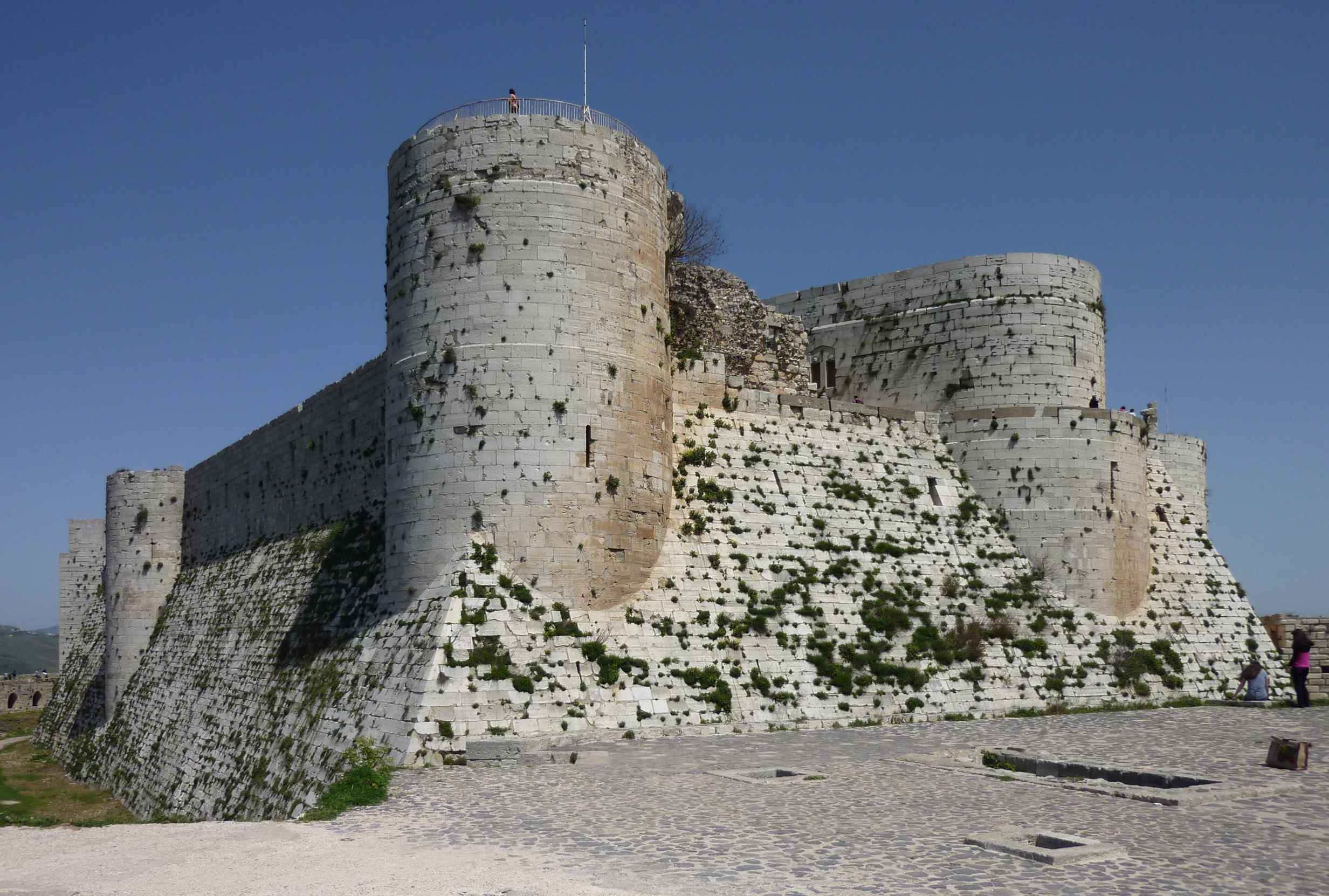
The Crusader States, also called the Latin East or Outremer, were four territories founded in the Levant by the armies of the First Crusade: the County of Edessa (1098), the Principality of Antioch (1098), the Kingdom of Jerusalem (1099), and the County of Tripoli (1109). Three of them clung to a narrow coastal strip defended by castles such as Krak des Chevaliers, while Edessa lay inland on the frontier of the Syrian desert.
Their founding was marked by mass killing. When Jerusalem fell on 15 July 1099, the crusaders slaughtered the city's Muslim and Jewish inhabitants. European chroniclers claimed tens of thousands of victims; the contemporary Muslim scholar Ibn al-Arabi put it at around 3,000 of the city's probable 30,000 residents; modern historians treat the higher numbers as exaggeration. Massacres of local people continued as the settlers imposed feudal rule, until they learned that holding the territory required the support of its diverse communities.
The settlers, known locally as Franks, remained a small minority, outnumbered roughly five to one by Muslims, and lived among Greek Orthodox and Armenian Christians, Jews, Bedouin Arabs, and Muslims of various sects. A limited toleration developed, but these communities faced discriminatory laws and taxes, and almost all authority, secular and religious, stayed in Frankish hands.
Violence stayed central to the states' history. After the crusaders captured Acre in July 1191, Richard I of England, angered by delays in the agreed ransom, ordered the entire surrendered Muslim garrison, 2,700 men, marched outside the walls and executed in view of Saladin's army. Saladin struck back by killing most of his Christian prisoners.
Trade made the states rich: Acre became one of the great Mediterranean ports, charging duties of 4 to 25 percent on goods moving between east and west, and the Kingdom of Jerusalem minted its own gold coinage, something only Sicily in Europe managed at the time.
Saladin's victory at Hattin in 1187 cost the states Jerusalem, but they fought on: the Third Crusade regained the coast, Acre became the new capital, and Jerusalem itself was regained through Emperor Frederick II's diplomacy in 1229, only to be lost again in 1244. The end came in 1291, when Acre fell to the Mamluks; the states' mainland lands were absorbed into the Mamluk Sultanate, and the Latin East survived only as a refuge on Cyprus.
 World History Encyclopedia: Crusader States
World History Encyclopedia: First Crusade
 Britannica: Third Crusade
World History Encyclopedia: Sixth Crusade