 Go Back

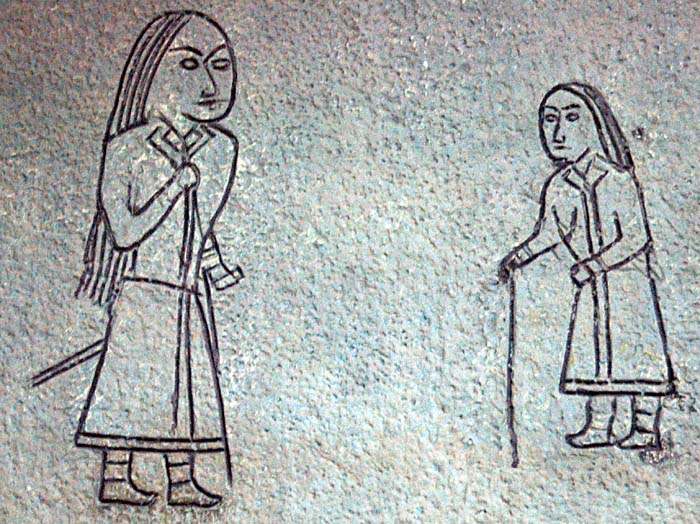
The Göktürk Khaganates. The Göktürks - the 'Celestial Turks' - were the first people in history to build an empire under the name Turk. In 552, Bumin Qaghan of the Ashina clan, whose people had worked metal for the Rouran Khaganate in the Altai Mountains, overthrew his masters and founded the First Turkic Khaganate. Within a generation his descendants ruled the Mongolian Plateau and much of Central Asia, straddling the Silk Road between China, Sasanian Persia, and Byzantium.
The khaganate was a new kind of state: a tribal confederation bound to the Ashina clan, whose authority came from Tengri, the sky god - the khagan ruled because heaven had granted him qut, divine fortune. Its people were multi-ethnic; whatever the Ashina themselves originally spoke, their empire spread Turkic speech and a common steppe culture across Eurasia. 'Turk' itself began as the name of this ruling people alone - the Göktürks did not count the Uyghurs or Kyrgyz as Turks - before becoming the label of a whole world of peoples.
The empire's curse was division. Civil war among the khagans split it into Eastern and Western khaganates, and China's Tang dynasty exploited the weakness: in 630 Emperor Taizong's armies crushed the Eastern khaganate at the Battle of Yinshan and captured its ruler, and the eastern Turks spent fifty years as Tang subjects. But in 682 Ilterish Qaghan and his chancellor Tonyukuk raised the revolt that founded the Second Turkic Khaganate, restoring steppe independence for another sixty years - the age of Bilge Khagan and his brother Kul Tigin.
That restored empire left us its own voice: the Orkhon inscriptions, memorial steles raised in the Orkhon valley to Kul Tigin and the chancellor Tonyukuk, carved in the Old Turkic runic script - the first steppe empire to tell its story in its own words. In 744 the Uyghurs, allied with the Tang, destroyed the last khaganate and took the Mongolian Plateau - but the Göktürk model of a Turkic empire would echo down to the Seljuks and Ottomans.
 Britannica: Turkic peoples
 Humanities LibreTexts: 6.1.6: Turkic Migrations
 Wikipedia: Göktürks
Britannica: The Steppe - Turkic, 550-1200, Eurasia