 Go Back

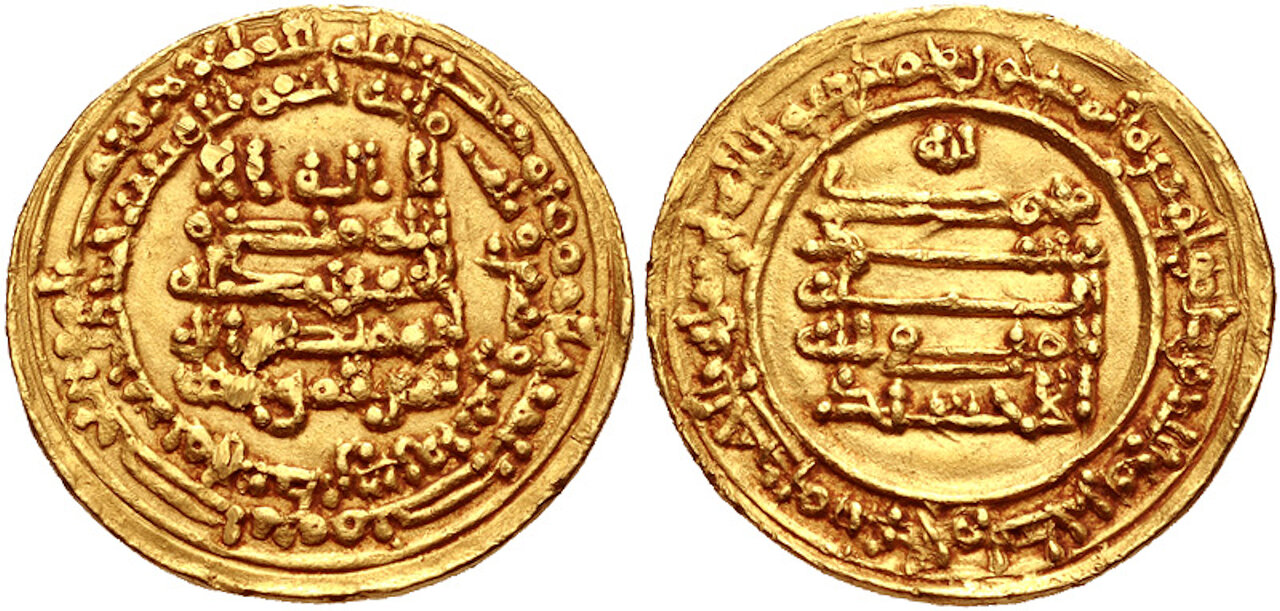
The Ikhshidids and the Tulunids. The Tulunids and the Ikhshidids were the two dynasties that first detached Egypt from direct Abbasid rule. The Tulunids (868-905) began with Ahmad ibn Tulun, a Turkic slave-soldier sent to Egypt as lieutenant-governor, who quietly made himself its master: he built a strong army, seized Syria, stopped remitting Egypt's revenues to Baghdad, and founded a new capital, al-Qata'i, next to Fustat. His great mosque of Ibn Tulun (879), with its spiral minaret and vast brick arcades, still stands as Cairo's oldest intact monument.
Ibn Tulun's son Khumarawayh (r. 884-896) ruled a brilliant, spendthrift court famous for luxury - quicksilver pools, gardens of quicksilver and scent - and married his daughter to the caliph's son in a peace settlement that recognized Tulunid hereditary rule. But the dynasty's extravagance and a child succession drained it, and in 905 an Abbasid army restored direct rule, demolishing al-Qata'i except the mosque.
A generation later the pattern repeated. Muhammad ibn Tughj al-Ikhshid, a Ferghana-born commander, took Egypt in 935 and Syria with it, beating off the Hamdanids; the Abbasid caliph confirmed him with the Persian title Ikhshid. His Ikhshidid dynasty (935-969) ruled Egypt for over three decades - most of them under the iron regency of his black eunuch vizier Kafur, a former slave who governed Egypt ably for twenty years and whose court poets, including the great al-Mutanabbi, both praised and mocked him.
After Kafur's death in 968 the state collapsed in months: child rulers, famine, and army factions left Egypt defenseless, and in 969 the Fatimid general Jawhar marched from Ifriqiya and took the country without a battle. The Tulunid-Ikhshidid century had nonetheless decided Egypt's future: it proved Egypt could stand alone as a Mediterranean power - the reality the Fatimids, Ayyubids and Mamluks would inherit.
 Britannica: Ikhshidids Dynasty
 Humanities LibreTexts: The Fatimid Caliphate
 The Metropolitan Museum of Art: The Art of the Abbasid Period (750-1258)