 Go Back

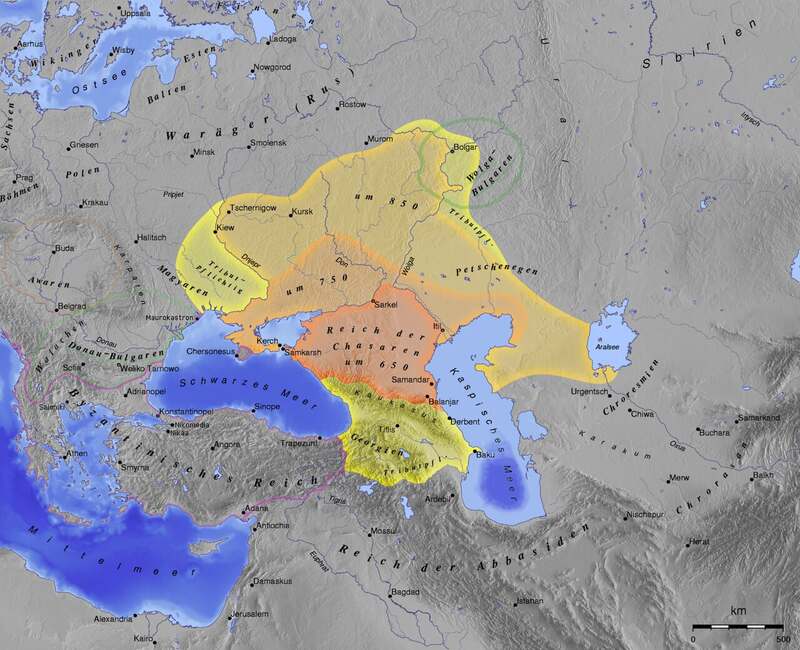
The Khazar Khaganate (c. 650-969) was the great trading empire of the western steppe - and home to one of the most remarkable religious choices in medieval history: its ruling elite converted to Judaism. The Khazars, a Turkic tribal confederation, emerged from the breakup of the Western Turkic Khaganate to dominate the grasslands from the Volga and the Don to the Crimea and the northern Caucasus. Like the steppe empires before them they were ruled by a sacral khagan, ritually isolated, while a deputy - the beg - commanded the armies and ran the state.
Khazaria's first century was war. The Arabs burst into Transcaucasia in the 640s, attacking the Khazar town of Balanjar as early as 642, and for nearly a hundred years the frontier between caliphate and khaganate ran through the Caucasus passes. Khazar raiders struck deep - to Ardabil in 730, almost to Mosul - and Arab armies struck back: in 737 the future caliph Marwan led a great expedition across the steppe and forced the khagan to accept Islam. The conversion did not stick. But the wars fixed the boundary: south of the mountains, the caliphate; north of them, Khazaria.
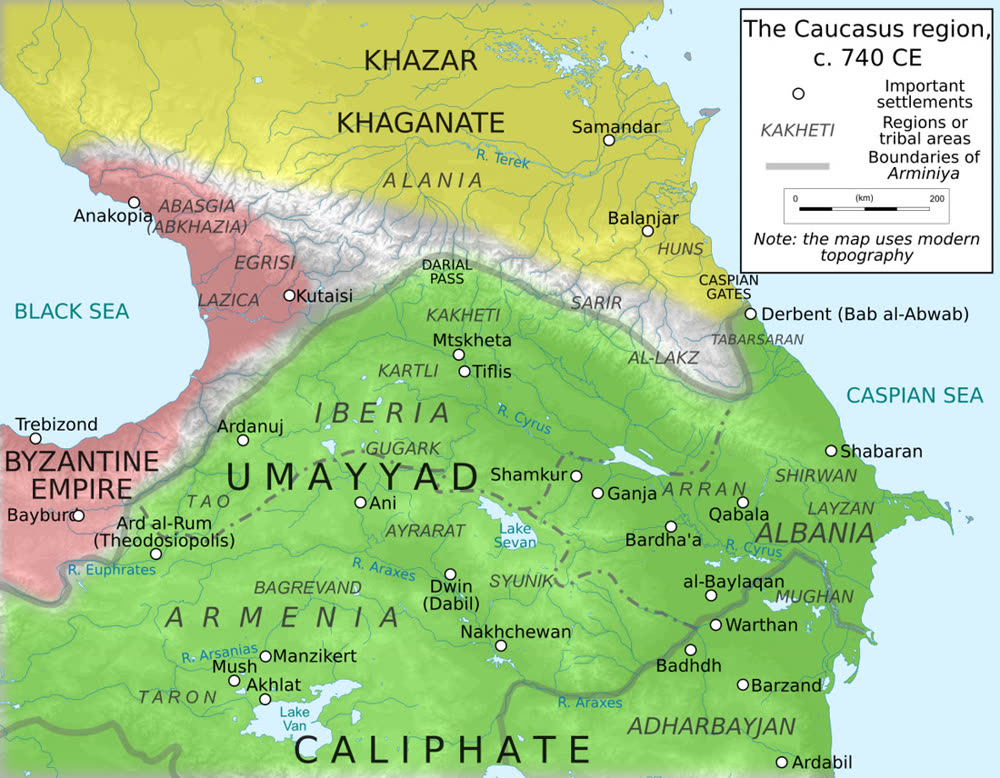
Khazaria's power was geography. Astride the routes between Eastern Europe, the Islamic world, and the East, it commanded the western marches of the Silk Road, taking a tenth of the value of the goods that crossed its lands. Its capital Atil, at the Volga delta, was a cosmopolitan trading city of tents around the ruler's palace, with quarters of Muslims, Jews, Christians, and pagans and judges for each community - its exact site has never been found. For three centuries the khagans stood as the indispensable buffer of the early medieval world: first Byzantium's ally against Sasanian Persia, then the barrier between the caliphate and the peoples of the north.
Then, sometime in the eighth century - the date is still disputed - the Khazar court did something no other state has done before or since: the khagan Bulan and his elite adopted Rabbinic Judaism. Politically it was a masterstroke: a third faith, belonging to neither of the great powers pressing on Khazaria, Christian Byzantium and the Islamic caliphate. How far the conversion spread beyond the ruling class remains genuinely uncertain; the sources are sparse, and the state stayed multireligious to the end. The khagan Joseph's famous letter to Hasdai ibn Shaprut, the Jewish vizier of Cordoba, written around 960, proudly traced his line back to Bulan and described his kingdom's wars and trade.
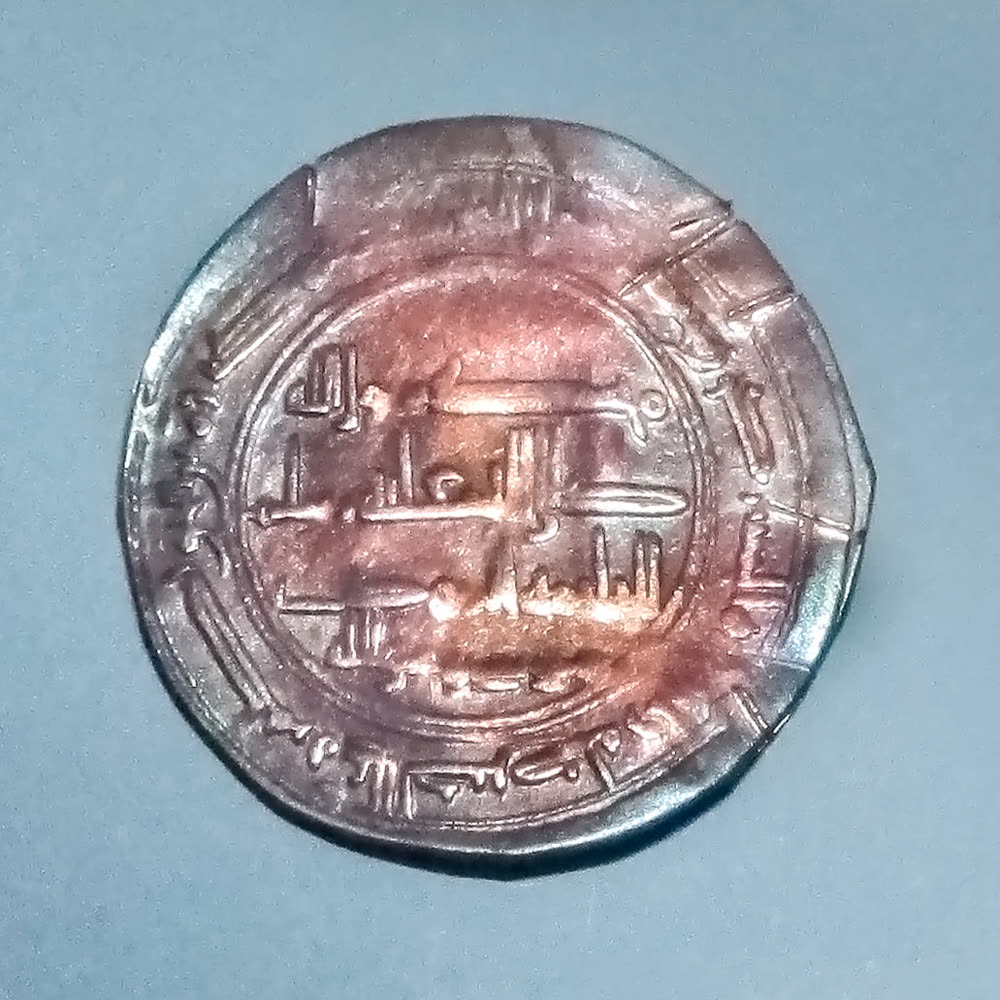
Khazaria's end came when the balance shifted against it. Around 900 Byzantium, no longer needing its buffer, encouraged new enemies against it - the Pechenegs, the Magyars, and above all the Rus' of Kiev. In 965-969 Prince Sviatoslav of Kiev stormed down the Don and the Volga, sacked the Khazar cities, and destroyed Atil; the khaganate disintegrated over the following decades, its peoples absorbed by Cumans, Rus', and others. One caution for the modern reader: the theory that most Ashkenazi Jews descend from the Khazars is a myth - linguistic and genetic studies have refuted it. The real Khazars need no embellishment: a steppe empire that taxed the Silk Road, held the Caucasus for three centuries, and chose its own faith.
 Britannica: Khazar
 Encyclopaedia Iranica: KHAZARS
 Wikipedia: Khazars
 YIVO Encyclopedia: The YIVO Encyclopedia of Jews in Eastern Europe