 Go Back
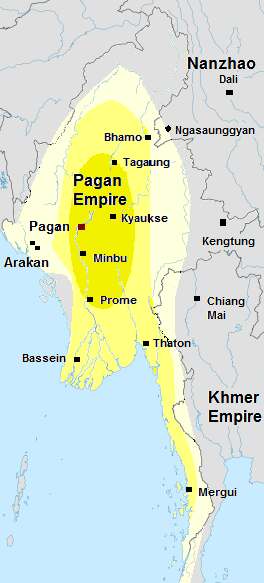
The Pagan Kingdom. The Pagan Kingdom was the first empire to successfully unify the regions that would later constitute modern Myanmar, ruling from the 9th to the 13th centuries CE. Located along the banks of the Irrawaddy River, the capital city of Pagan grew into a massively wealthy religious center. This kingdom matters heavily because its rulers officially adopted Theravada Buddhism, embedding it deeply into the local culture and building literally thousands of towering brick stupas across the plains. They also standardized the Burmese language and legal codes, laying the foundational cultural identity of the region.
The state poured an unsustainable amount of tax exempt wealth into building and maintaining these sprawling monastic complexes. This religious generosity slowly but permanently crippled the royal treasury, weakening the central government's ability to maintain a strong military. When the aggressively expanding Mongol Empire demanded heavy tribute in the late 13th century, the Burmese kings proudly refused. The Mongols quickly invaded, decisively shattering the Pagan army and causing the kingdom to completely splinter into competing regional states.