 Go Back

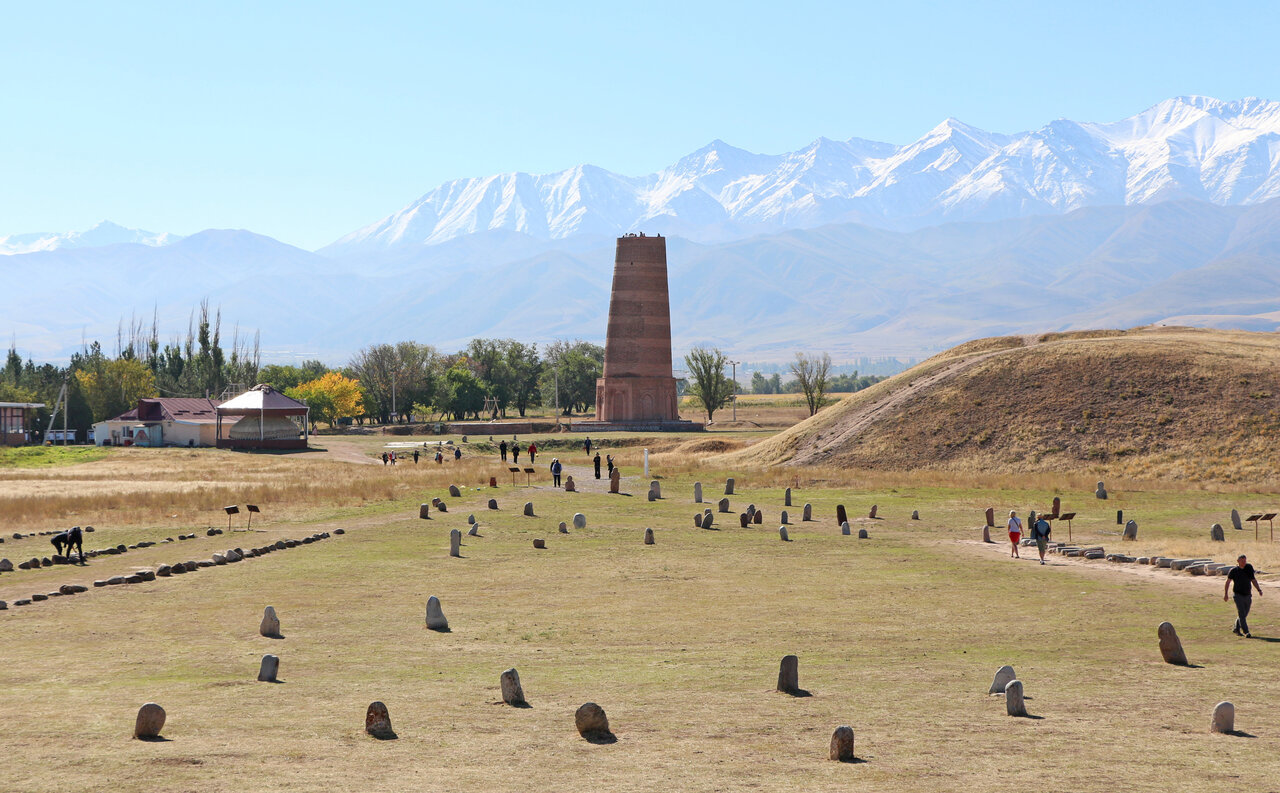
The Qarakhanids. The Qarakhanids (999-1211) were the first Turkic Muslim dynasty to rule Central Asia. Descended from the Karluk and related tribes of the western steppe, whose ruler Satuq Bughra Khan had converted to Islam in the mid-10th century, they ended Samanid rule in 999 when the Ilak (Ilig) Nasr took Bukhara, and went on to rule Transoxiana, Kashgaria and the Tarim Basin for two centuries.
The dynasty never formed a single centralized empire: it split (formally by the 1040s) into a western khanate at Samarkand and Bukhara and an eastern one at Kashgar and Balasagun, ruled by rival branches of the family under the supreme title of khaqan (khan of khans). Their most celebrated ruler, Tamghach Khan Ibrahim (r. 1052-1068), restored prosperity after civil wars; but from 1089 the western khanate fell under Seljuk overlordship, and in the 12th century the whole dynasty became a tributary of the Kara Khitai.
Qarakhanid rule transformed the culture of Central Asia. Under them, Turkic peoples of the oases and steppe adopted Islam and Persianate urban civilization, while a new Islamic-Turkic literature was born: Yusuf Khass Hajib wrote the Kutadgu Bilig ('Wisdom of Royal Glory', 1069), the first great work in a Turkic language, for the Qarakhanid prince of Kashgar, and Mahmud al-Kashgari compiled his famous dictionary of the Turkic dialects (1072-74). Their madrasas, caravanserais, and the stunning brick minarets of Bukhara (the Kalyan Minaret, 1127, spared by Genghis Khan) and Uzgen survive today.
Squeezed between the Kara Khitai, the Khwarazmians and the rebellious Kuchlug, the last Qarakhanid khans of Samarkand and Kashgar were extinguished by 1211-1212. But they had made Islam permanently Turkic and Central Asia permanently Muslim, and their blend of Turkic kingship and Persian-Islamic culture defined the region until the Mongols and long after.
 Britannica: Qarakhanid Dynasty
 Encyclopaedia Iranica: Qarakhanid
Encyclopaedia Iranica: Central Asia in the Islamic Period up to the Mongols