 Go Back

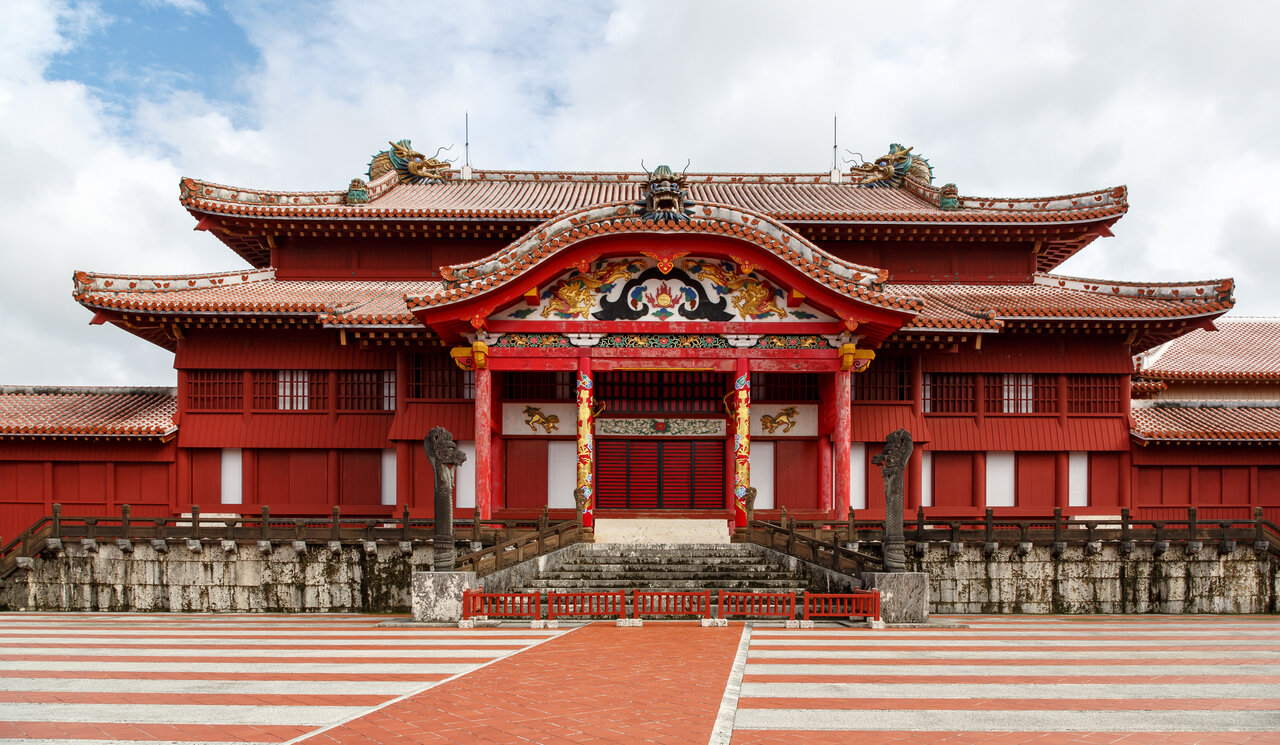
The Ryukyu Kingdom. The Ryukyu Kingdom (1429-1879) united the islands of Okinawa and the Ryukyu chain into a small but extraordinary maritime state. After centuries of rival local chieftains (the 'Three Mountains' period), Sho Hashi of Chuzan conquered the island's other lords and in 1429 established his kingdom with its capital at Shuri Castle, a hilltop palace-fortress blending Chinese and Japanese forms.
The kingdom's genius was trade. Wedged between China and Japan, the Ryukyus made themselves the great entrepot of the East China Sea: Ryukyuan ships carried Chinese porcelain and silk, Japanese silver and swords, Korean ginseng and Southeast Asian spices between Naha, Fuzhou, Kyushu, Siam, Malacca and Patani. Tribute missions to Ming and Qing China brought enormous trading privileges - the Ryukyuans were among the most welcome foreigners at the Chinese court - and Naha's cosmopolitan merchant community included a famous settlement of Fujianese families at Kumemura.
Ryukyuan culture was distinctive: its own language and court ritual, Confucian learning, a written literature in Japanese kana and Chinese characters, the sanshin (ancestor of the Japanese shamisen), karate developed in the islands, and a religion led by priestesses (noro) under the chief priestess (kikoe-ogimi), often the king's sister. Shuri Castle's gates, with their Chinese-style calligraphy, proclaimed 'the land of propriety'.
In 1609 the Satsuma domain of Japan invaded and made Ryukyu a vassal - while carefully preserving the fiction of its independence to keep the China trade flowing, a dual subordination that lasted 270 years. In 1879 the new Meiji state abolished the kingdom outright and made Okinawa a prefecture. Shuri Castle, rebuilt after wartime destruction and again after the 2019 fire, remains the symbol of the islands' distinct identity.
 Britannica: Ryukyu Islands
 World History Encyclopedia: The Ryukyu Castles of Okinawa
Britannica: Ryukyu Islands