 Go Back

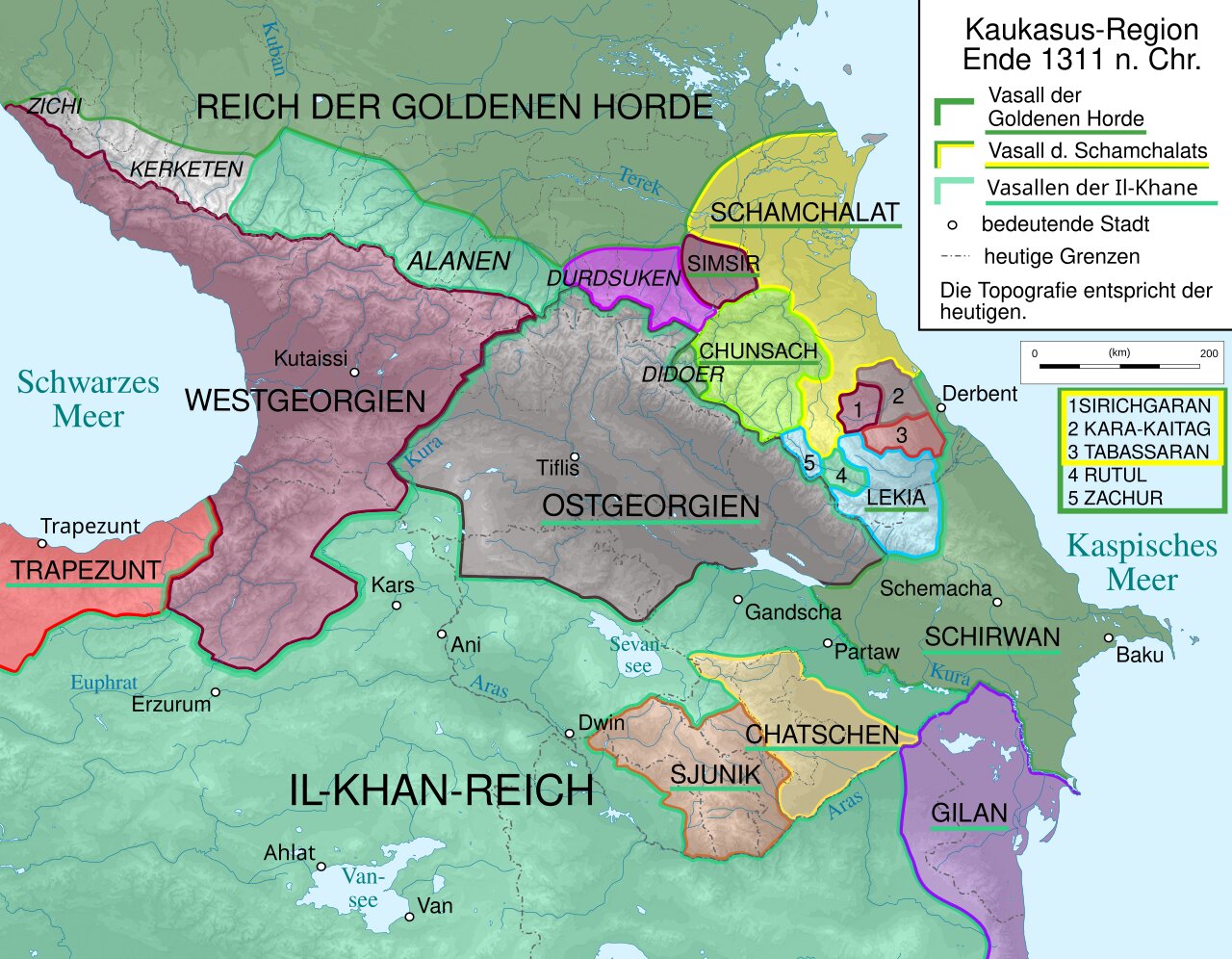
The Shirvanshahs. The Shirvanshahs (861-1538) ruled Shirvan - the Caspian coastal plain of modern Azerbaijan - for nearly seven centuries, one of the longest-lived dynasties in Islamic history. Descended from an Arab military family Persianized over generations, they held the corridor between the Caucasus and the Caspian through every storm of the age: Sajids, Salarids, Rawadids, Seljuks, Mongols, Ilkhans, Timur, and the Qara and Aq Qoyunlu Turkmen, surviving by a practiced mix of tribute, marriage and mountain retreats.
The dynasty's greatest patron-king was Ibrahim I (r. 1382-1417), and its golden age came under Khalilullah I and Farrukh Yasar in the 15th century, when Baku grew into a walled port-city and the court at Shamakhi and Baku patronized poets - the famous divan poets Khaqani and Nizami had flourished under the dynasty's earlier centuries in Shirvan, and the Shirvanshahs' protection of letters made their small kingdom a cultural beacon.
The Shirvanshahs' enduring monument is Baku's old city: the Palace of the Shirvanshahs, a 15th-century complex of palace, mosque, tomb and bath of honey-colored stone, together with the mysterious Maiden Tower, forms a UNESCO World Heritage site and the emblem of Azerbaijan. Their carved stone, coinage and mosque endowments record a court that blended Persian high culture with Caspian local tradition.
The end came with the Safavid revolution. The Shirvanshahs fought the fanatical Qizilbash armies of Shah Ismail I, were defeated (1500-1501), and the last ruling Shirvanshah was killed in 1538, when Shirvan became a Safavid province. The family survived as honored Safavid governors for another century - an unusually soft landing for a dynasty that had outlasted every empire it ever served.
 Encyclopaedia Iranica: Servansahs (Shirvanshahs)
Encyclopaedia Iranica: Baku: General
 Humanities LibreTexts: The Safavid Empire