 Go Back

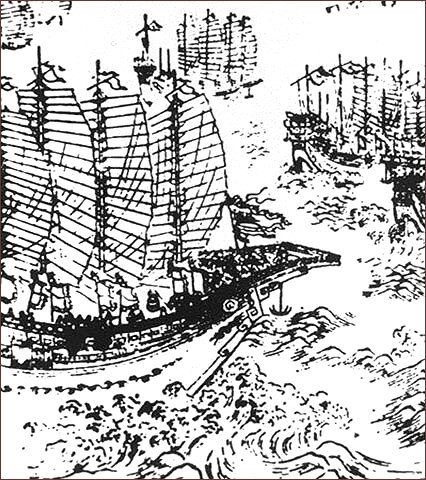
The Ming Treasure Voyages. Between 1405 and 1433 the Ming dynasty sent seven enormous naval expeditions across the Indian Ocean - the largest wooden fleets the world had ever seen. Commanded by the eunuch admiral Zheng He, a Muslim from Yunnan captured as a boy and castrated into palace service, the 'treasure fleet' numbered at its height over 300 ships and 27,000 men, led by 'treasure ships' reportedly more than 100 meters long - dwarfing anything Europe would float for centuries.
The voyages were the personal project of the Yongle Emperor (r. 1402-1424), a usurper seeking legitimacy and glory abroad. The fleet's purposes mixed diplomacy, trade and power: to enroll the Indian Ocean world in China's tributary system, to display Ming might, to hunt the deposed Jianwen Emperor rumored to have fled overseas, and to bring home exotic tribute - spices, gems, ostriches, zebras, and most famously a giraffe from Malindi (1414), presented at court as the auspicious qilin of legend.
Zheng He's squadrons called at Champa, Java, Malacca, Ceylon and Calicut, then Hormuz, Aden and the East African coast as far as Malindi. The fleet was no peaceful embassy only: it destroyed the pirate king Chen Zuyi at Palembang, intervened in Ceylon to seize a hostile king, and built fortified depots at Malacca and Semudera - a demonstration that China could, if it chose, command the sea lanes.
After Yongle's death the voyages faced bureaucratic hostility - the cost, Confucian disdain for trade, and the renewed Mongol threat on land - and after the seventh voyage (1431-1433) they were stopped, the fleet rotted, and records were destroyed. Private Chinese trade flourished on despite sea bans, but the state's retreat from the ocean, on the eve of the Portuguese arrival, remains one of history's great 'what ifs' - and Zheng He's voyages are today celebrated in China as the high-water mark of its maritime power.
 Britannica: Zheng He
 World History Encyclopedia: The Seven Voyages of Zheng He
World History Encyclopedia: Yongle Emperor