 Go Back

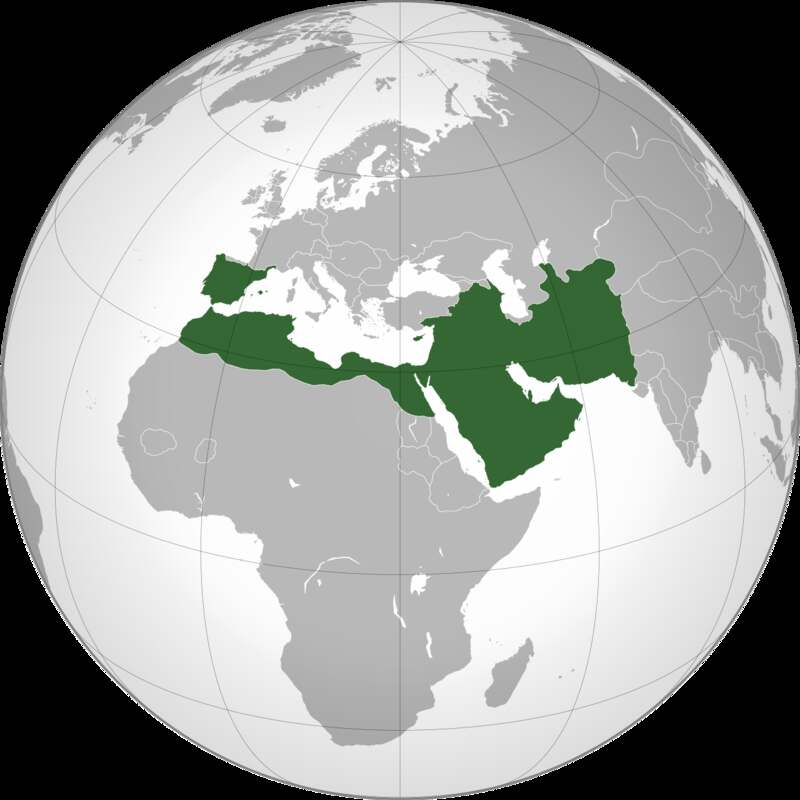
The Umayyad Caliphate (661-750 CE) turned the young Islamic state into one of the largest empires the world has ever seen. Its founder, Muawiya ibn Abi Sufyan, had served twenty years as governor of Syria when he emerged victorious from Islam's first civil war and took the caliphate in 661. He moved the capital from Medina to Damascus and replaced the elected leadership of the Rashidun with something new: a hereditary dynasty, ruling an empire of millions - most of them neither Arabs nor Muslims.
Muawiya was a politician before he was a soldier, famous for preferring gifts and patience to bloodshed. From Damascus he governed through the existing Byzantine and Sasanian machinery, kept the Arab tribal armies in uneasy balance, and built the state's first navy to raid the Byzantine frontier. But his decision to name his son Yazid as heir settled the nature of the new order: the caliphate would pass within one family. When Muawiya died in 680, the decision was tested at once.
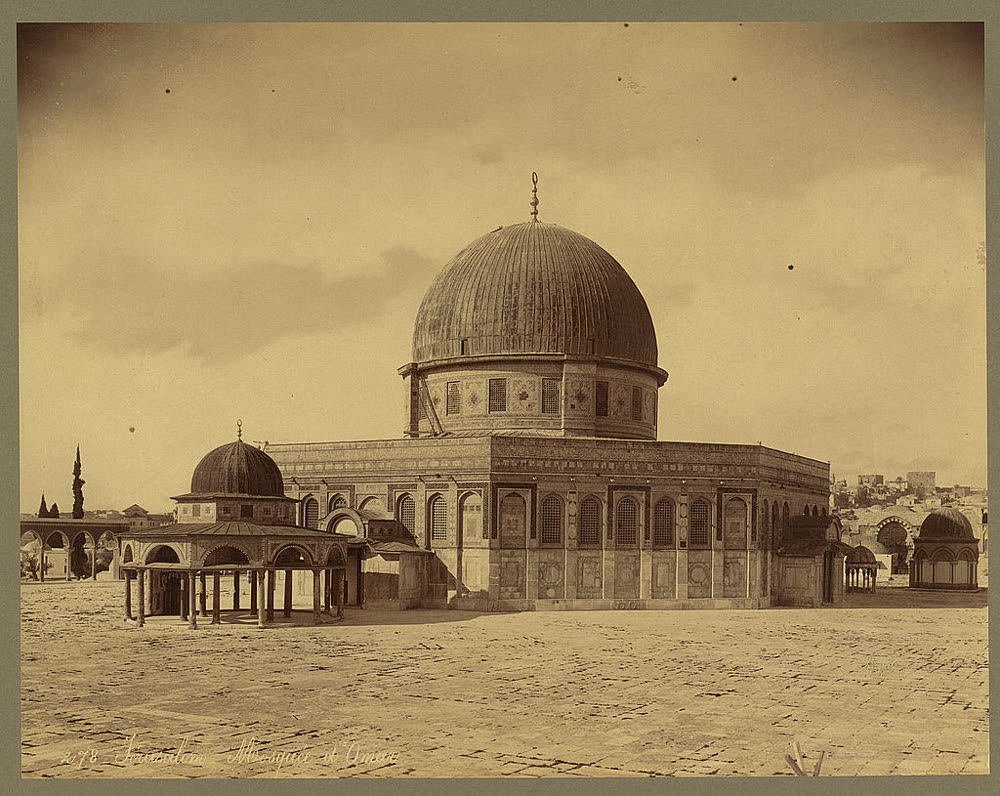
Yazid's reign brought the dynasty's darkest hour: the revolt of Husayn, the Prophet's grandson, ended with his death at Karbala in 680 - a wound in the community that has never healed. The Second Fitna that followed nearly destroyed the Umayyads; rival authority held Mecca, and the dynasty's survival hung by a thread. It was saved by Abd al-Malik (r. 685-705), who reunified the empire by 692 and then rebuilt it deliberately: he replaced Greek and Persian with Arabic as the language of administration, minted the first distinctly Islamic coinage, and crowned his reign with the Dome of the Rock in Jerusalem - the announcement, in stone and mosaic, that Islam had an empire to match its faith.
Under Abd al-Malik's sons, above all al-Walid I, the conquests reached their astonishing peak. In a single year, 711, Umayyad forces crossed into Spain - toppling the Visigothic kingdom within a few years - and conquered Sindh in the Indus valley. In the east other armies took Samarkand and Bukhara and pushed toward the borders of China; in the west the whole North African coast fell, and in the Mediterranean the caliphate's fleets fought the Byzantines for the sea. At its height the empire stretched from the Atlantic to the Indus - perhaps eleven million square kilometers. It governed this vast, mostly Christian, Zoroastrian and Buddhist population with a light hand: the tolerated faiths paid the jizya tax and staffed much of the civil service.
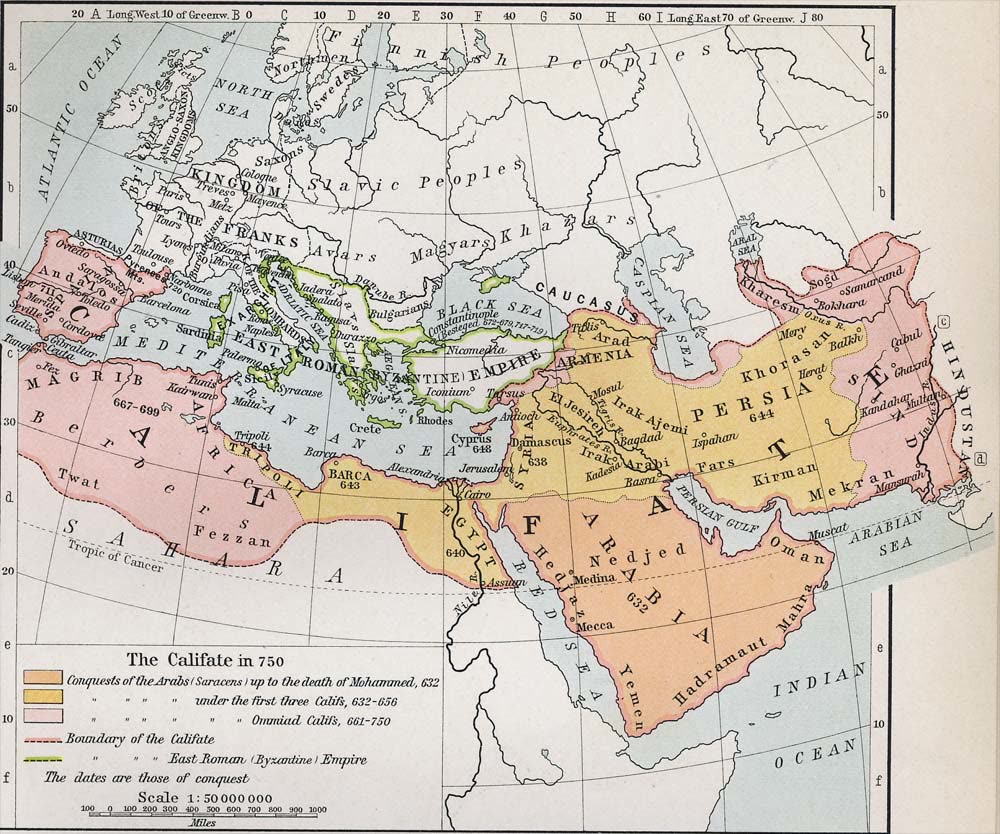
The same expansion destroyed the dynasty. Constant frontier warfare - above all the great failed sieges of Constantinople - drained the treasury; the Arab tribal factions within the army tore at each other; and the mawali, the non-Arab converts who were Muslims yet treated as second-class citizens, gave the opposition its tinder. In the east a revolution gathered under the banner of the Abbasids, descendants of the Prophet's uncle Abbas, and in 750 it destroyed the dynasty at the Battle of the Zab. The victors massacred the Umayyad family, even exhuming the caliphs from their tombs.
One prince escaped. Abd al-Rahman, a grandson of the caliph Hisham, fled across North Africa one step ahead of Abbasid agents and crossed into Spain - the farthest reach of his family's conquests. There, in 756, he was proclaimed emir and founded the Emirate of Cordoba, which under his descendants would become the most brilliant state in Europe. The Umayyads had lost their empire in the east; in the west their story ran for three more centuries.
 Britannica: Umayyad dynasty
 World History Encyclopedia: Umayyad Dynasty
 Humanities LibreTexts: 8.9: The Umayyad Caliphate
 The Metropolitan Museum of Art: The Art of the Umayyad Period (661–750)