 Go Back

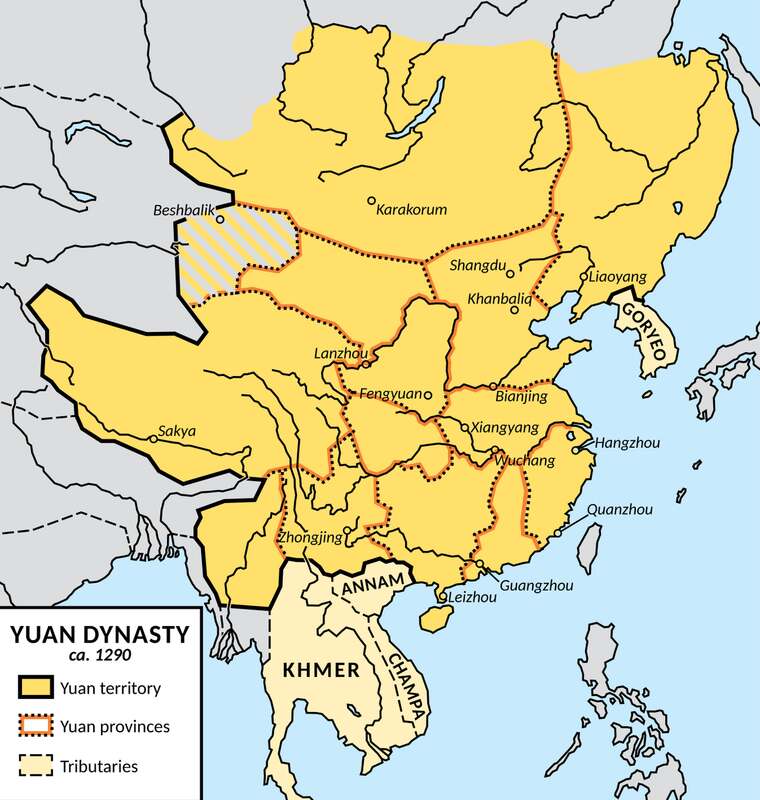
The Yuan dynasty (1271-1368) was China's first empire under foreign rule - the moment when the heirs of Genghis Khan ceased to be merely conquerors of China and became its emperors. In 1271 Kublai Khan, grandson of Genghis and Great Khan of the Mongol Empire, proclaimed the 'Great Yuan' in the Chinese style, taking the name from the I Ching and claiming the Mandate of Heaven and the succession of China's dynasties. In 1279 his forces destroyed the last Song resistance at the naval battle of Yamen, and for the first time in history a non-Han dynasty ruled all of China proper - unifying the country for the first time since the ninth century.
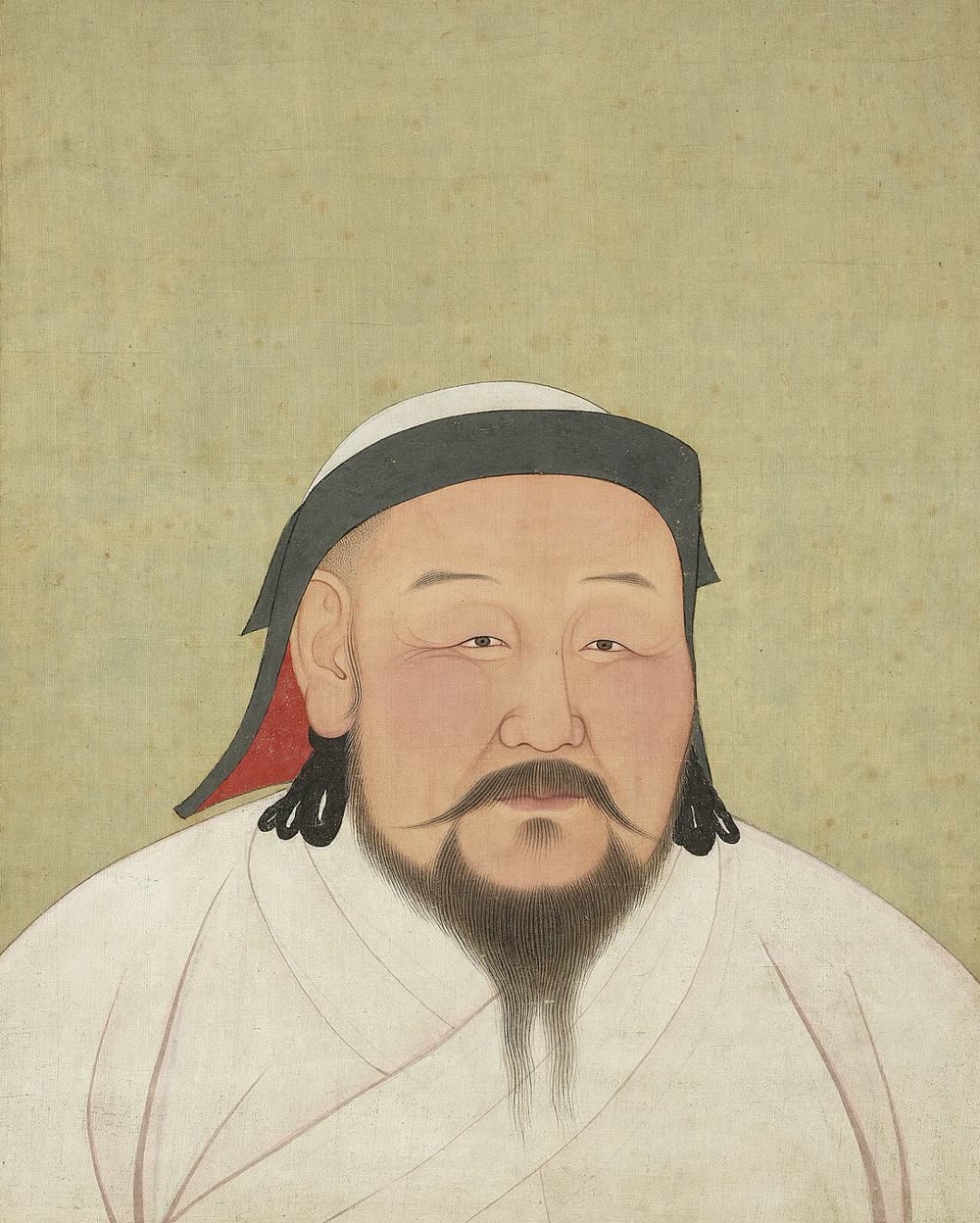
The conquest took eleven years of grinding siege warfare. The Song countered the Mongol cavalry with fortified cities and rivers, and Kublai picked off the strongpoints one by one - most famously Xiangyang, which held out for six years. In 1276 the empress dowager surrendered the Song capital Lin'an with the child emperor Gongzong; loyalists fought on with two more boy emperors until the Mongol fleet caught them at Yamen, near modern Macao, on 19 March 1279. The last Song chancellor leapt into the sea with the nine-year-old Emperor Bing in his arms, and the Song were finished. Kublai's ambitions were not: his two invasions of Japan failed, wrecked by storms the Japanese called kamikaze, the 'divine wind', and his expeditions into Southeast Asia fared little better.
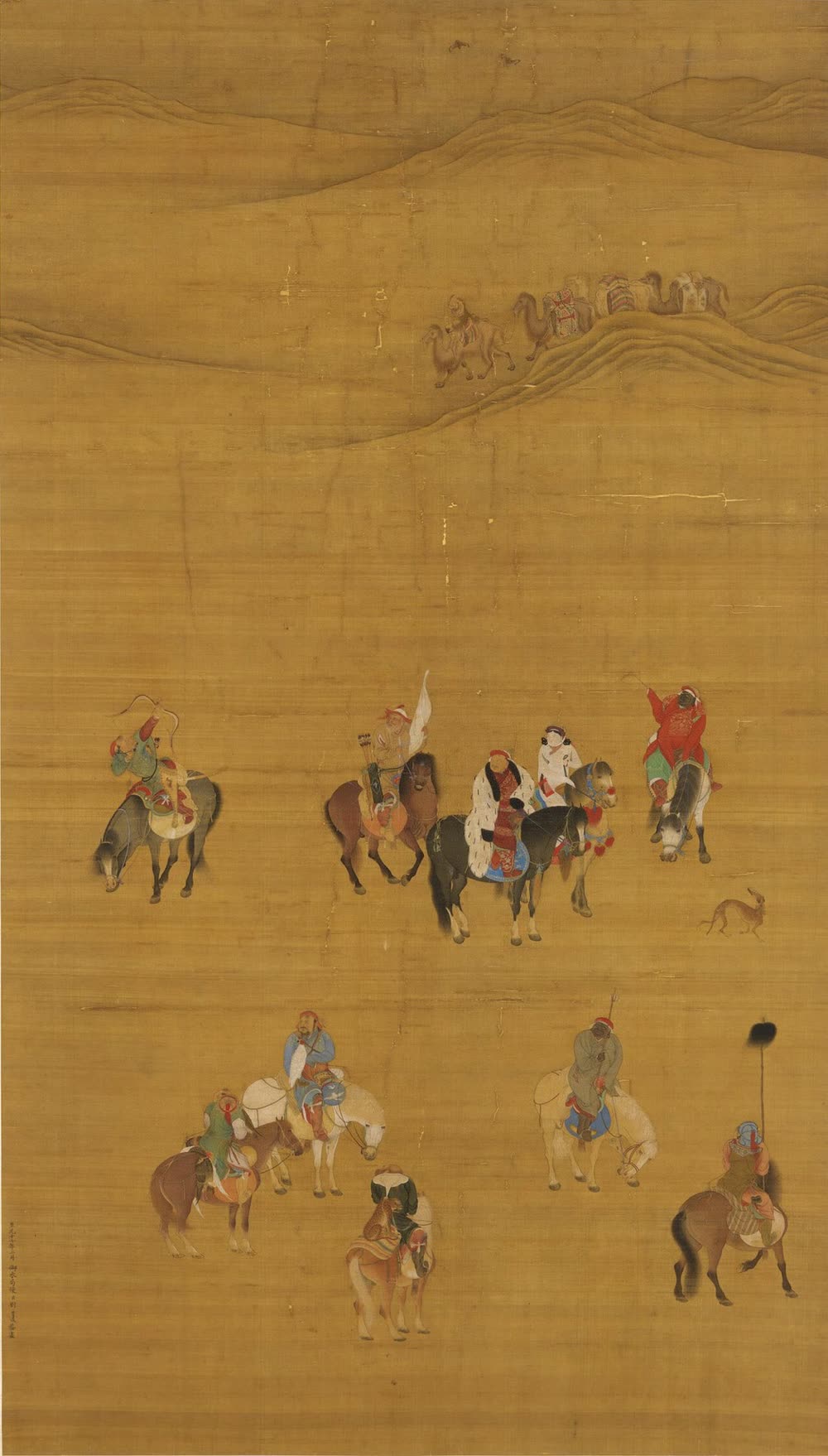
Kublai (r. 1260-1294) built a new winter capital at Dadu - modern Beijing - with a summer capital at Shangdu, 'Xanadu', in the steppe: the twin cities summed up the dynasty's double nature, Chinese empire and Mongol khanate at once. The Yuan was, in name, the supreme khanate of the Mongol world, and in 1304 the western khans formally recognized the Yuan emperor's supremacy, though in practice each khanate went its own way. The dynasty governed a vast multi-ethnic state with Mongols and foreigners - Persians, Central Asians, even the Venetian Marco Polo claimed a place at court - in the top ranks; it commissioned the 'Phags-pa script to write Mongolian and circulated paper money across the empire. The open roads of the Pax Mongolica brought unprecedented contact between China, the Islamic world and Europe, and Beijing's career as China's capital began at Dadu.
Mongol rule never fully took root. The emperors after Kublai grew weaker, the court tore itself in succession struggles, and the government overspent and overtaxed while Yellow River floods and famine battered the countryside. Peasant revolts rumbled through the fourteenth century until the Red Turban rebellions, beginning in 1351, devoured the south. Out of the chaos rose Zhu Yuanzhang, a destitute peasant turned monk turned rebel commander; in 1368 he drove the Mongol court from Dadu and proclaimed the Ming dynasty.
The Yuan story did not quite end there. The Genghisid rulers retreated to the Mongolian plateau and ruled on as the 'Northern Yuan' until 1635. But in Chinese history 1368 closed a unique chapter: the era when the steppe ruled the sown, when the world's largest land empire had its heart on the site of Beijing - and when China, for one century, was the greatest prize of the house of Genghis Khan.
 Britannica: Yuan dynasty
 World History Encyclopedia: Yuan Dynasty
 Humanities LibreTexts: 4.13: The Yuan Dynasty
 The Metropolitan Museum of Art: Yuan Dynasty (1271–1368)