 Go Back

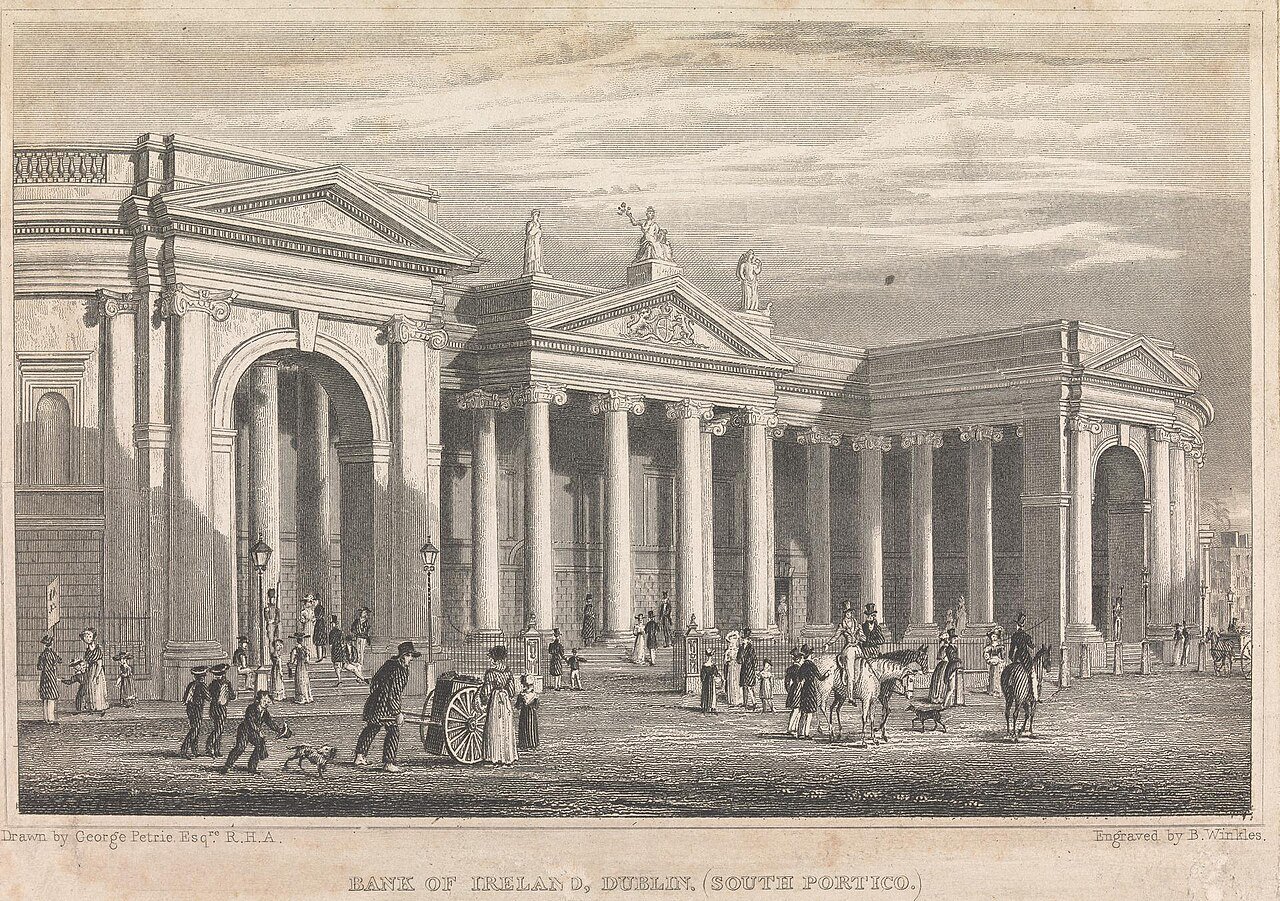
The Act of Union. The rebellion of 1798 frightened the British government into a constitutional revolution. Ireland, ruled since 1782 by its own Protestant parliament in Dublin, had proved it could drift toward revolution and French invasion; the prime minister William Pitt resolved to absorb it. The instrument was a legislative union on the model of Scotland's in 1707: the Irish and British parliaments would merge into one Parliament of the United Kingdom at Westminster, and the two kingdoms would become, from 1 January 1801, the United Kingdom of Great Britain and Ireland.
The Irish parliament had to vote itself out of existence, and it would not do so for nothing. The first attempt in 1799 was defeated; the second, in 1800, was carried by the most systematic bribery in the history of either parliament: peerages, pensions, offices and hard cash - the British government spent and promised on a colossal scale, and compensated the borough-owners whose pocket seats were abolished. Catholic support was courted with a promise Pitt could not keep: that union would bring Catholic Emancipation, the right of Catholics to sit in Parliament.
On the first day of 1801 the United Kingdom came into being, with a new flag - the Union Jack, joining the crosses of St George and St Andrew with the saltire of St Patrick - and a hundred Irish members at Westminster. Dublin lost its parliament, and with it much of its political class and prosperity: the great Georgian capital slowly became a backwater of a legislature three hundred miles away, a decline its unionist opponents never tired of mourning.
Emancipation did not come: King George III refused it, Pitt resigned, and the broken promise poisoned the union from its birth. Daniel O'Connell built his career on undoing it, first through Emancipation in 1829, then through the Repeal movement of the 1840s. Every strand of later Irish politics - O'Connell's repeal, Parnell's Home Rule, the separatism of 1916 - defined itself against the union of 1801, until the treaty of 1921 undid it for most of the island.
 Britannica: Ireland - The Act of Union
Britannica: William Pitt the Younger
Britannica: Henry Grattan