 Go Back

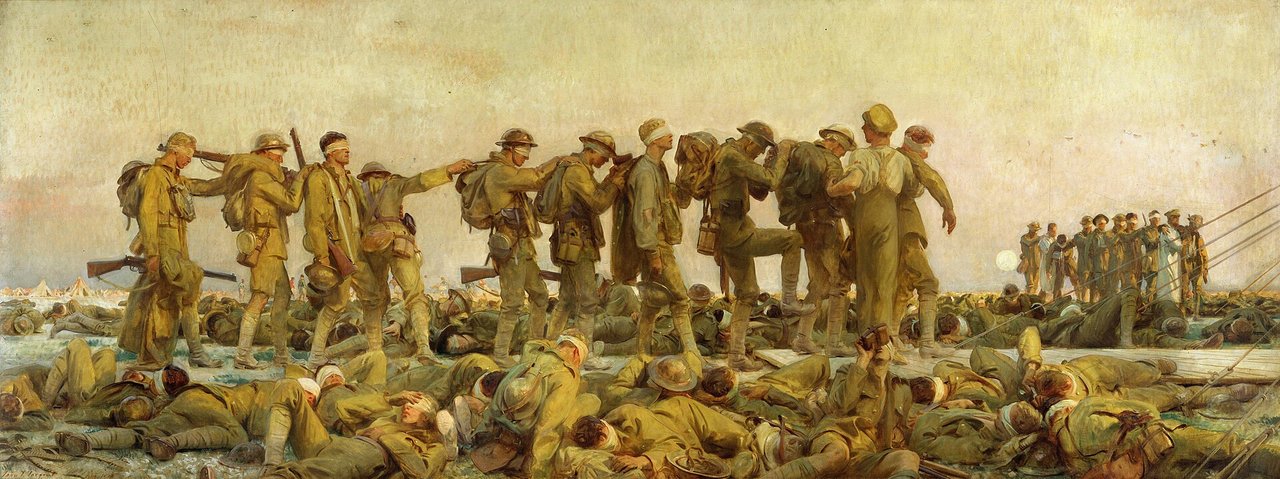
Britain in the First World War. On 4 August 1914, after Germany invaded Belgium, Britain declared war. The small professional army - the Old Contemptibles of the British Expeditionary Force - crossed the Channel at once and was nearly destroyed holding the line at Mons, Le Cateau and the first Battle of Ypres. Kitchener's call for volunteers answered the loss: by 1916 nearly two and a half million men had enlisted, many in the Pals battalions where streets, factories and football teams joined together - and would die together.
The war in the trenches consumed them. The first day of the Somme, 1 July 1916, was the worst day in the history of the British army: nearly twenty thousand dead before noon, among them the 36th (Ulster) Division and the Newfoundland Regiment, for gains measured in yards. Loos, Arras, Passchendaele followed - battles of mud, wire and machine guns that became permanent words in the language of grief. Yet the army of 1918 that finally broke the German line in the Hundred Days was the most powerful Britain ever fielded, and at sea the blockade and Jutland held the ring.
The home front was remade as thoroughly as the army. Lloyd George's munitions ministry organized an economy of total war; women - over a million of them - went into the shell factories and onto the buses and the land, work that helped win them the vote in 1918; conscription, rationing and DORA's censorship reached into every home. Ireland convulsed in the Easter Rising of 1916, and in 1918 Britain fought its election on the promise to make a land fit for heroes.
Victory came on 11 November 1918 at a price the country could not count: some 880,000 British dead, two million wounded, a national debt multiplied tenfold, and in nearly every town and village a war memorial with too many names. The empire stood at its greatest extent - and its foundations were cracked. Britain after 1918 was poorer, more democratic, less certain, and shadowed by the generation that had not come home.
 Imperial War Museums: First World War
 Britannica: Battle of the Somme
Britannica: World War I