 Go Back

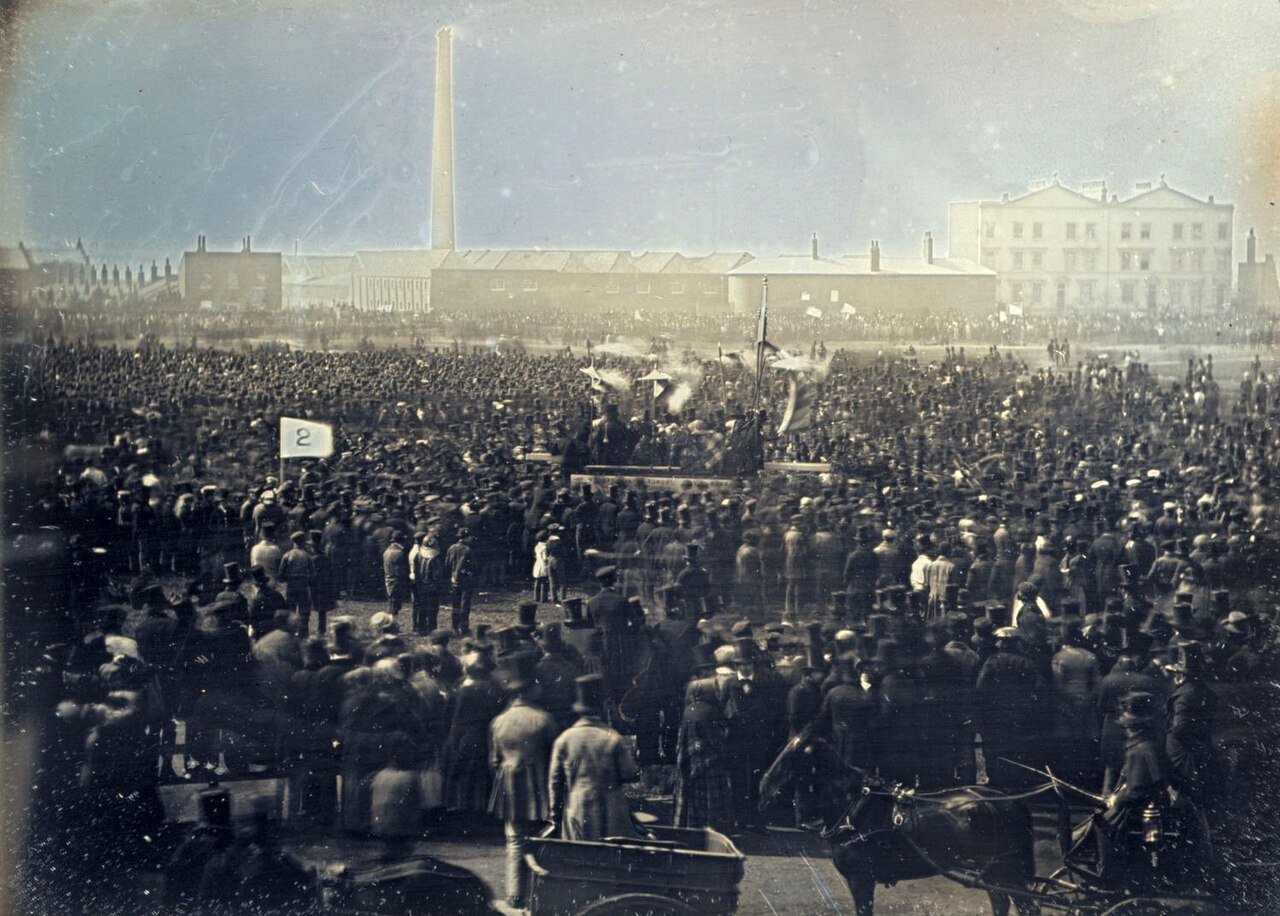
Chartism and the Reform Acts. In 1832 the Great Reform Act redrew the political map of Britain: the rotten boroughs were swept away, the industrial cities got seats, and the vote went to the middle class. But the working men who had marched and petitioned for the act got nothing, and their answer came in 1838: the People's Charter, six demands for full democracy - a vote for every man, the secret ballot, no property qualification for MPs, payment of members, equal constituencies, and annual parliaments. Chartism was born, the first mass working-class political movement in the world.
Three times the Chartists carried monster petitions to Parliament - in 1839 with over a million signatures, in 1842 with more than three million, in 1848 with what they claimed were six million - and three times Parliament refused to look at them. The movement strained between its prophets: William Lovett's moral force of education and self-improvement, and Feargus O'Connor's physical force that flirted with insurrection. In 1839 a rising of Welsh miners at Newport was shot down; in 1842 the general strike of the Plug Plots swept the mill towns; in 1848, with Europe in revolution, the government swore in two hundred thousand special constables - and the Kennington Common meeting dispersed in the rain.
Chartism died of its failures and of prosperity: the repeal of the Corn Laws, the rising wages of the 1850s, and emigration drew off its force, and its last leader, O'Connor, ended his days in an asylum. The ruling classes congratulated themselves that England was not a revolutionary country.
And then, peacefully and by degrees, the Charter won. The secret ballot came in 1872, payment of MPs in 1911; the Second Reform Act of 1867 doubled the electorate and gave town working men the vote, the Third in 1884 extended it to the counties, and by 1918 nearly every man - and the first women - had the vote. Five of the Charter's six points are the law of the land today; only annual parliaments were never tried. Chartism lost every battle and won the war for British democracy.
 Britannica: Chartism
Britannica: Reform Bill of 1832
 The National Archives: Chartism