 Go Back

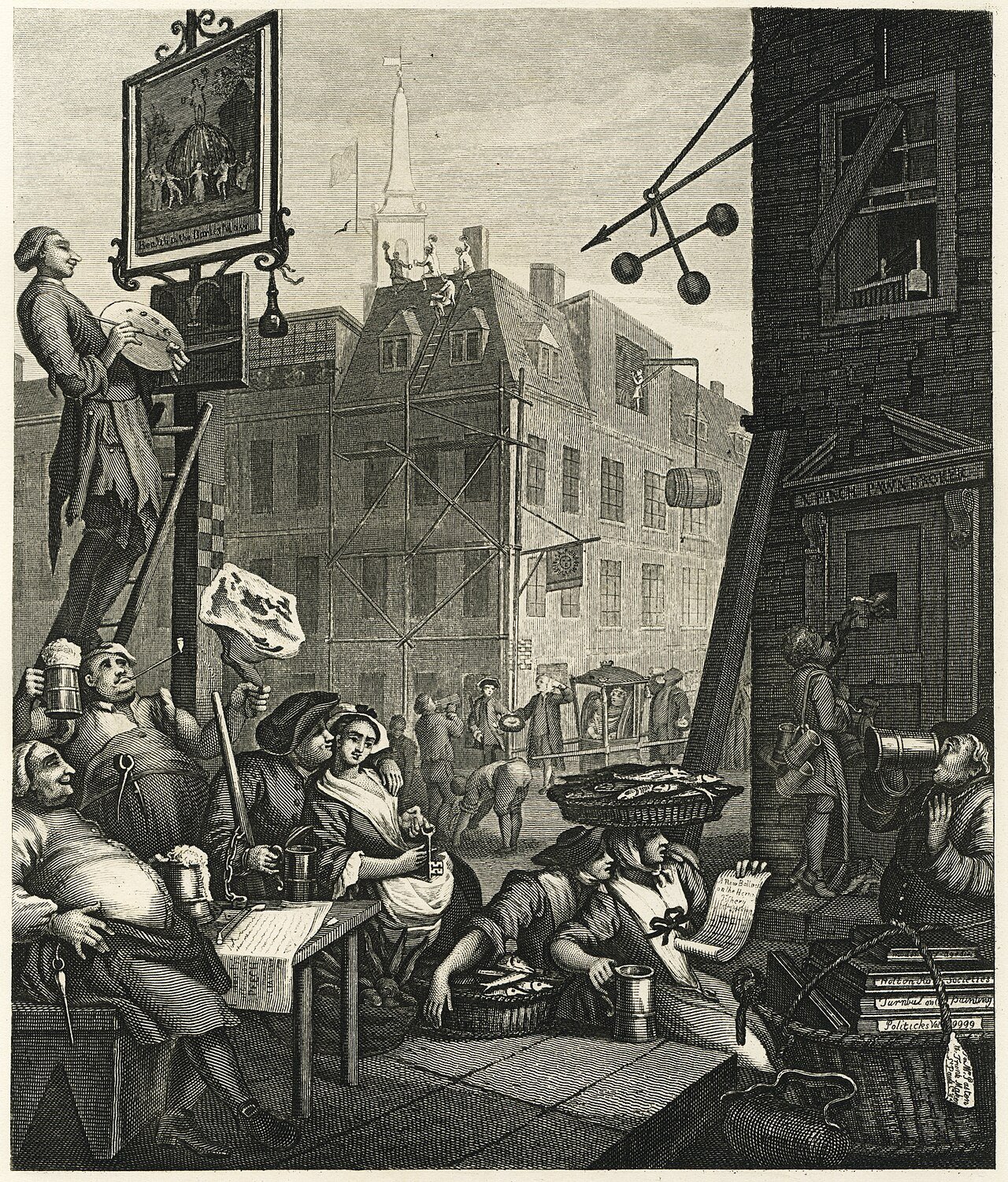
Georgian Britain. The four Georges ruled from 1714 to 1830, and under them Britain became the first industrial nation and the greatest commercial power on earth. The dynasty began precariously: George I was a German Lutheran of Hanover, fifty-fourth in the ordinary line, brought in by the Act of Settlement to keep the Catholic Stuarts out. He spoke little English and cared more for Hanover, and the consequences were constitutional: as the king withdrew from the cabinet, power passed to his ministers - to Sir Robert Walpole, who governed for twenty years and is counted the first Prime Minister.
The dynasty survived the Stuart counterattacks - the Jacobite risings of 1715 and 1745 - and under George III, who gloried in the name of Briton, the monarchy re-engaged. George III's sixty-year reign (1760-1820) held most of the age's dramas: the loss of the American colonies, the long wars against revolutionary and Napoleonic France won at sea by Nelson and on land by Wellington, the union with Ireland in 1801, and the king's own tragedy - the madness, now thought to be porphyria, that from 1811 left his son ruling as Prince Regent.
It was an age of astonishing surface. Georgian Britain gave the world the Georgian terrace and the crescent - Bath, Edinburgh's New Town, Regency London under Nash - the novels of Jane Austen, the poetry of Byron and Wordsworth, the landscapes of Constable and Turner, the science of the Royal Society, and a political world of rotten boroughs, coffee-house debate and savage caricature. Beneath the elegance ran hunger, gin, the press-gang, and the new industrial towns where the future was being forged.
The Regency ended in the Brighton Pavilion splendor of George IV; his brother William IV presided over the Great Reform Act of 1832; and in 1837 the crown passed to the eighteen-year-old Victoria. The Georgian age had carried Britain from a minor Protestant kingdom to the workshop and the ruler of the world's seas - and left the monarchy transformed from a governing power into a national symbol.
 Britannica: George III
Britannica: Robert Walpole
Britannica: Whig and Tory