 Go Back

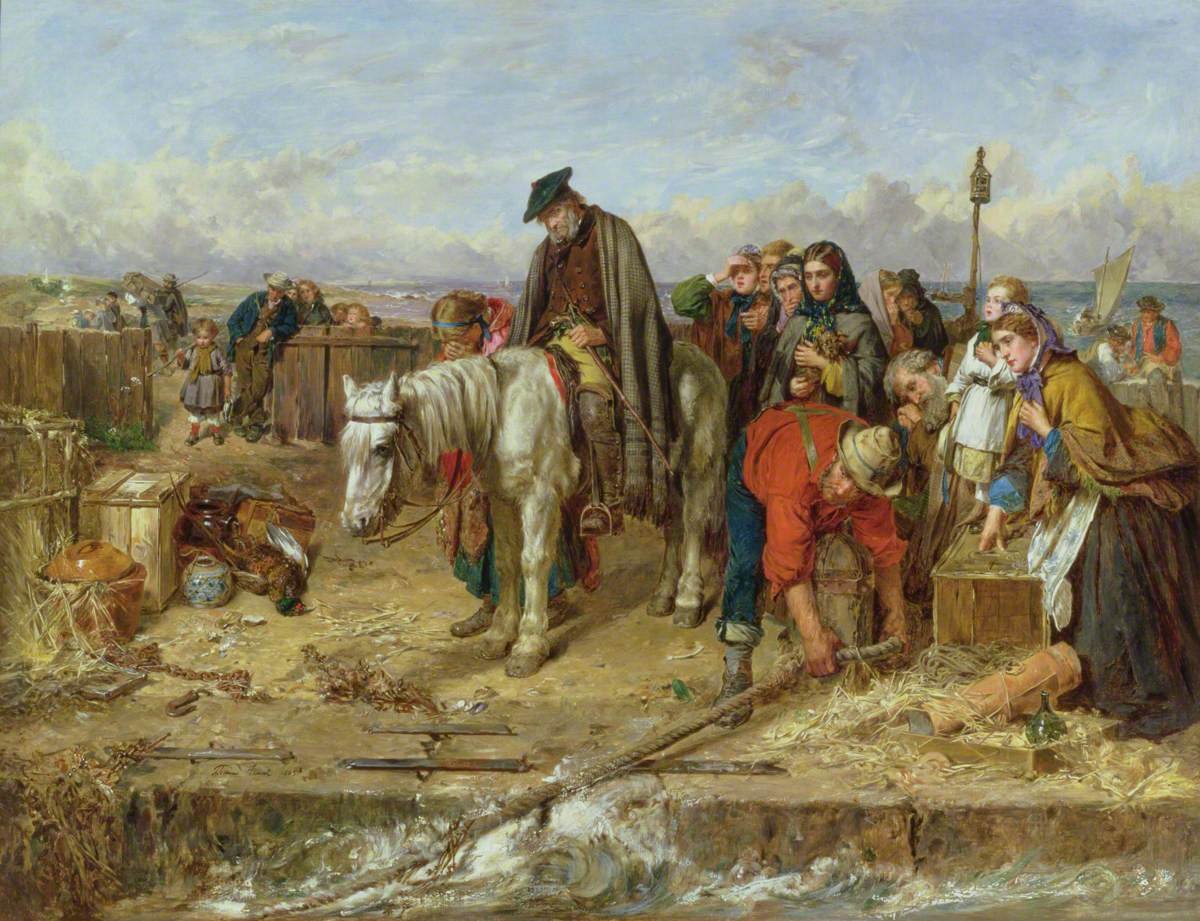
The Highland Clearances. In the generations after Culloden, the chiefs of the Scottish Highlands - shorn of their old powers, schooled in the south, and deep in the debts of lowland fashion - discovered that their glens were worth more grazed by sheep than farmed by men. The Cheviot and the Blackface could pay rents the small tenants, the crofters, could not. So, beginning in the late eighteenth century and running for a hundred years, the people of the Highlands were cleared: moved off the inland townships where their families had farmed since before memory, to make way for the great sheep walks.
The worst of it was on the Sutherland estates, where between 1807 and 1821 the agents of the Countess of Sutherland - Patrick Sellar above all - removed some fifteen thousand people, burning the roof-timbers of the townships over the evicted so they could not return. Some families were offered tiny crofts on the barren coast, to live by fishing and kelp-burning; thousands more took ship for Canada, or were assisted - and sometimes forced - aboard by landlords glad to see them go. The people burned out of Strathnaver carried the name of Sellar's clearances, and of the duchess's, in bitterness for generations.
The potato famine of 1846 brought a second, crueler wave: with the kelp trade dead and the crofts unable to feed them, the congested western glens and islands were cleared again - by eviction, by assisted emigration to Canada and Australia, and by simple destitution. The Highlands emptied: a region that had held a tenth of Scotland's people became a land of empty glens, deer forests for southern sportsmen, and ruins. Gaels called it na daoine a' dol as - the people going away.
Resistance came late but came: the crofters' war of the 1880s - the Battle of the Braes, the rent strikes of Skye and Lewis - forced the Crofters' Holdings Act of 1886, which gave the remaining crofters secure tenure at last. The diaspora did the rest of the remembering: the cleared Highlanders peopled Glengarry, Nova Scotia and a hundred townships beyond, and the Clearances remain, for Scotland and for the Gaelic world, the great unhealed injury of its modern history.
 Britannica: Highland Clearances
Britannica: Highlands
Britannica: Crofting