 Go Back

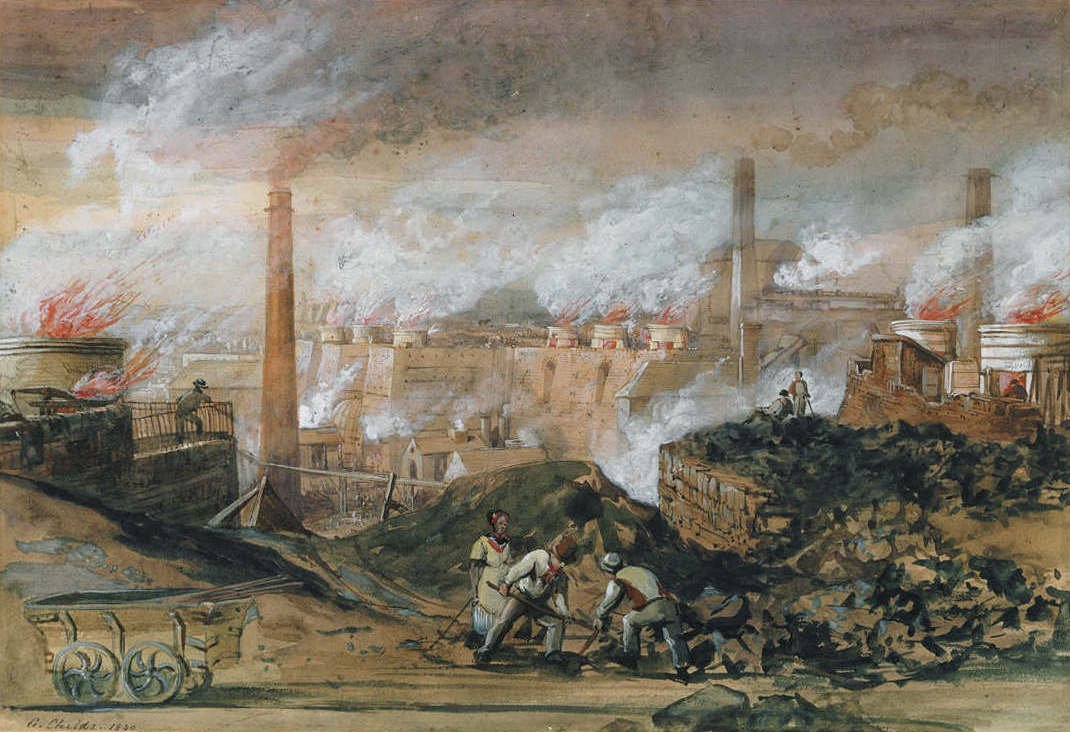
Industrial Wales. In 1750 Wales was a land of hill farmers; by 1900 it was one of the great workshops of the industrial world. The transformation began with iron: in 1759 the Dowlais works were founded at Merthyr Tydfil, where ironstone, coal, limestone and water power lay side by side, and within two generations Merthyr - a village become a town of furnaces, the largest in Wales - was the iron capital of the world. The Guest, Crawshay and Homfray works armed the wars against Napoleon, and Henry Cort's puddling process, developed for the Welsh works, made wrought iron by the shipload.
Then came coal. The South Wales coalfield, from Pontypool to Milford Haven, held the finest steam coal on earth, and the navies and railways of the world steamed on Welsh coal. The valleys filled: the Rhondda, a scattering of farms in 1850, held 150,000 people by 1914, strung along terraces between the pitheads. Cardiff, a small port in 1801, became by 1913 the greatest coal-exporting harbor on earth, where the price of world coal was fixed in its Coal Exchange. In the northwest the slate quarries of Bethesda and Blaenau Ffestiniog roofed the cities of three continents.
The wealth had its price, paid in the pits: Senghenydd in 1913, where 439 men and boys died in Britain's worst mining disaster, was one entry in a long ledger of explosion, flood and black lung. The valleys answered with their own institutions: the chapel, the eisteddfod, the male voice choir, the Workmen's Institutes and their libraries, and a fierce labor politics - the Tonypandy riots of 1910, the rise of the miners' unions, and eventually the Labour Party itself, which the valleys made their own for a century.
Industrial Wales made a new Welsh identity, English-speaking in the valleys, Welsh-speaking in the slate country, confident and nonconformist. The boom could not last: after 1918 the coalfield entered its long decline, and the interwar valleys knew unemployment of a kind that scarred generations. But the age of coal and iron had transformed a rural nation into an industrial one, and the terraces, the tips and the hymns remain its monuments.
 Britannica: Merthyr Tydfil
Britannica: Rhondda
Britannica: Cardiff