 Go Back

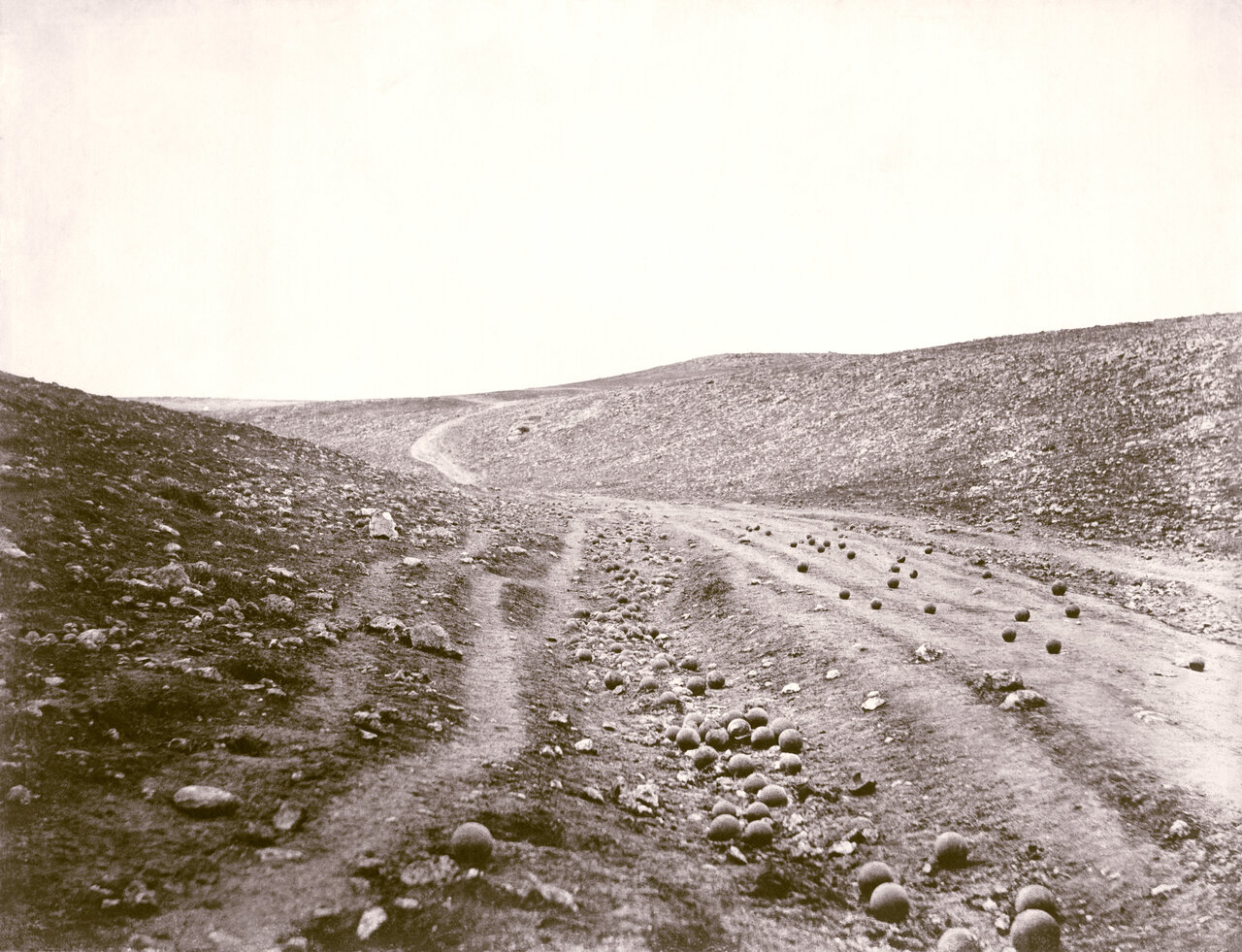
The Crimean War (1853-1856) pitted Russia against the Ottoman Empire, France, Britain and eventually Sardinia-Piedmont, the only great-power war in Europe between 1815 and 1914. Its immediate quarrel was almost farcical, rival rights of Catholic and Orthodox monks over the Holy Places in Jerusalem, but the substance was the 'Eastern Question': Tsar Nicholas I claimed a protectorate over the Ottoman Empire's Orthodox Christians and expected its collapse, while France championed the Catholics and Britain was determined to block Russian expansion toward the Mediterranean. When the Ottomans refused his demands, Nicholas occupied the Danubian Principalities (Moldavia and Wallachia) in 1853, and the Ottoman Empire declared war after Russia destroyed its fleet at Sinope (November 1853).
France and Britain entered in March 1854, and after Austria's pressure forced Russia to evacuate the principalities, the allies decided to strike at Russia's naval power itself: they landed in Crimea in September 1854 to take Sevastopol, home of the Black Sea Fleet. The war's battles became legends of mismanagement and endurance: the Alma (September 1854), a bloody allied victory; Balaclava (October 1854), with the thin red line of Highlanders and the disastrous Charge of the Light Brigade, a cavalry attack misdirected into a valley of guns; and Inkerman (November 1854), the 'soldiers' battle' in the fog, after which the allies, unprepared for winter, nearly died of cold, hunger and disease in their camps.
The siege of Sevastopol lasted nearly a year, its earthworks and artillery foreshadowing industrial siege warfare. The public storm over conditions, exposed by the first great war correspondents like William Howard Russell of The Times, brought down the Aberdeen government in Britain, and Florence Nightingale's nursing mission at Scutari cut the horrific death rate from disease and founded modern nursing. Sardinia joined the allies in 1855 to win a seat at the peace table for the Italian cause. After the fall of the Malakoff redoubt (September 1855) the Russians blew up Sevastopol's remaining forts and evacuated; the accession of Alexander II, after Nicholas I died in March 1855, opened the way to peace.
By the Treaty of Paris (1856) the Black Sea was neutralized, forbidding Russian warships and bases, a humiliation Russia nursed until it repudiated the clause in 1870, and the Ottoman Empire was admitted to the European concert with guarantees of its integrity. The war's costs, some 750,000 dead, mostly of disease, and shattered finances, drove Russia's great reforms, above all the emancipation of the serfs (1861). It ended the post-1815 conservative solidarity of Russia and Austria, leaving Austria isolated when the wars of Italian and German unification came, and it announced modern war: railways, telegraphs, rifled muskets, trench lines and war photography had all arrived.
 Britannica: Crimean War
New World Encyclopedia: Crimean War