 Go Back

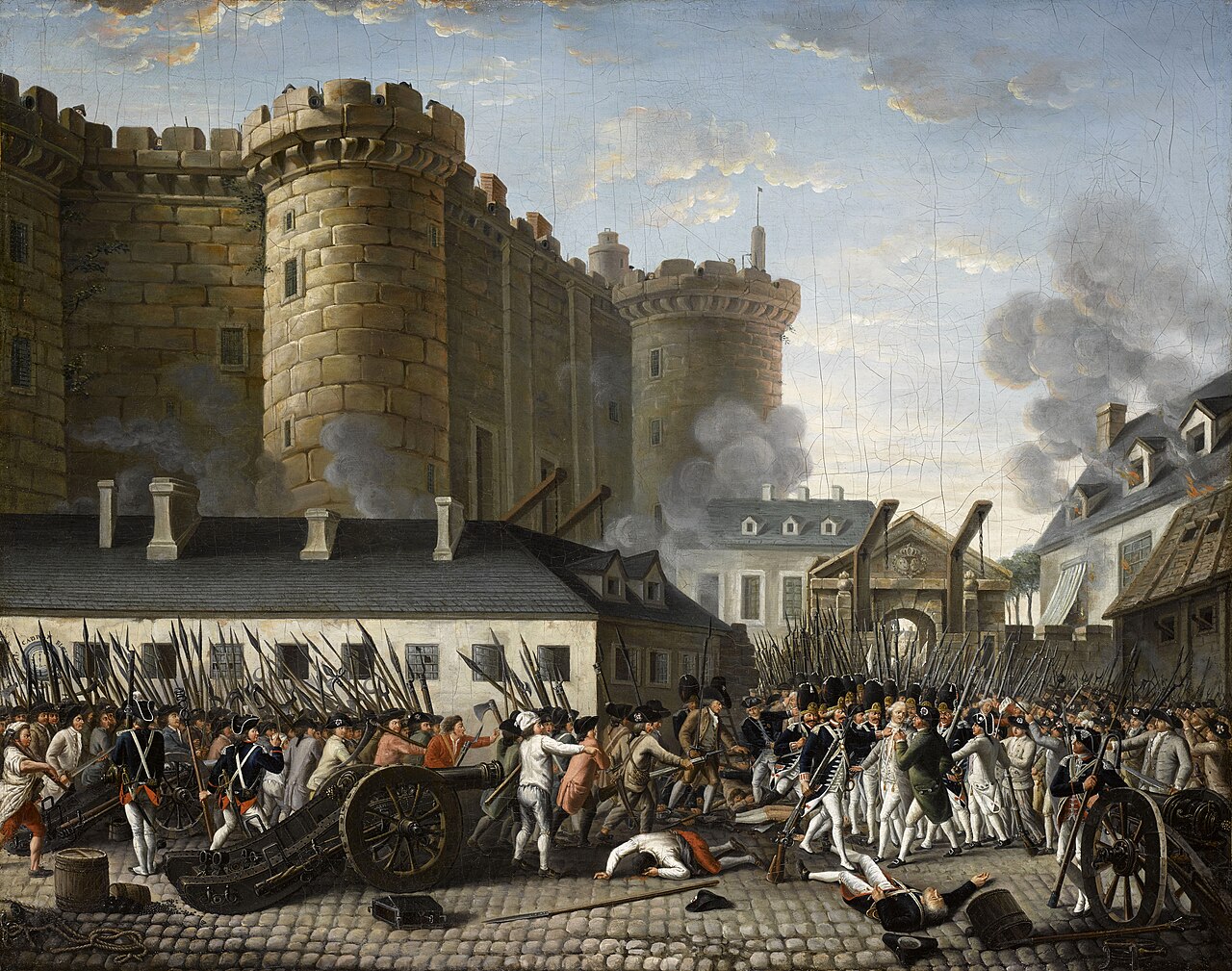
The French Revolution and Napoleonic France. In May 1789, a bankrupt French monarchy summoned the Estates General for the first time since 1614. The representatives of the Third Estate broke away and declared themselves a National Assembly; on 14 July Paris stormed the Bastille. Within weeks the Assembly had abolished feudalism, taken control of the Catholic Church, and issued the Declaration of the Rights of Man and of the Citizen - the charter of liberal democracy.
The revolution radicalized: the monarchy fell, the First Republic was proclaimed in September 1792, and Louis XVI was executed. From June 1793 power passed to the Jacobin-dominated Committee of Public Safety under Maximilien Robespierre: the Reign of Terror sent some 16,000 people to execution before Robespierre himself fell in July 1794. The unstable Directory that followed (1795) lasted until 9 November 1799, when General Napoleon Bonaparte seized power in the Coup of 18 Brumaire and made himself First Consul.
Napoleon consolidated the revolution's gains - and buried its republic. In December 1804 he crowned himself Emperor of the French, and for a decade his armies dominated Europe: Austerlitz in 1805 shattered the Third Coalition and dissolved the Holy Roman Empire, Jena-Auerstedt crushed Prussia in 1806, and his Napoleonic Code, public education, and equality before the law reshaped France and the lands he conquered - though he also abolished the free press and reinstated slavery in the colonies. The invasion of Russia in 1812 ended in catastrophic retreat; defeated and exiled to Elba in 1814, he escaped, ruled again for the Hundred Days, and met final defeat at Waterloo in June 1815, dying on Saint Helena in 1821.
The revolution and Napoleon together remade the world: they spread the ideas of equality before the law, popular sovereignty, and nationalism across Europe, redrew the continent's map, and established the model of the modern centralized state - while the wars that devastated Europe and Napoleon's mixed record on civil rights keep his legacy contested. France's own upheavals continued through the revolutions of 1830 and 1848.
 Britannica: History of France - The French Revolution and Napoleon, 1789–1815
 World History Encyclopedia: French Revolution
 PBS: PBS - Napoleon: Politics in Napoleon's Time
 BBC: History - Napoleon Bonaparte