 Go Back

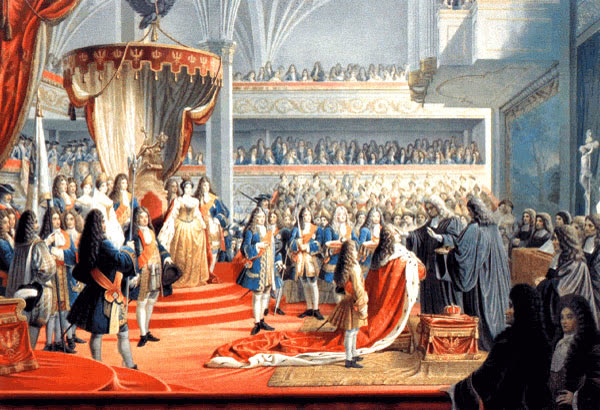
The Kingdom of Prussia was the state that made Germany. It was born on 18 January 1701 in the castle church of Konigsberg, when the Hohenzollern elector of Brandenburg - whose family had ruled those lands for centuries - placed a crown on his own head and became King Frederick I in Prussia. The new kingdom took its name from Prussia, the duchy on the Baltic outside the Holy Roman Empire's bounds, but its heart was the Margraviate of Brandenburg and its capital was Berlin: a second-rate power with a first-rate title.
Frederick's son made the title real. Frederick William I (r. 1713-1740), the 'Soldier King', concentrated the entire state on the military: he more than doubled the Prussian army from 30,000 to 83,000 men - the fourth largest in Europe, in one of Europe's poorer states - created formal conscription and the first system of trained reserves, lived in a few plain rooms and wore his officer's uniform everywhere. Contemporaries joked that Prussia was not a country with an army but an army with a country that served it. It was no joke: the barracks-state he built, and the treasury he filled, were the inheritance his son would spend.
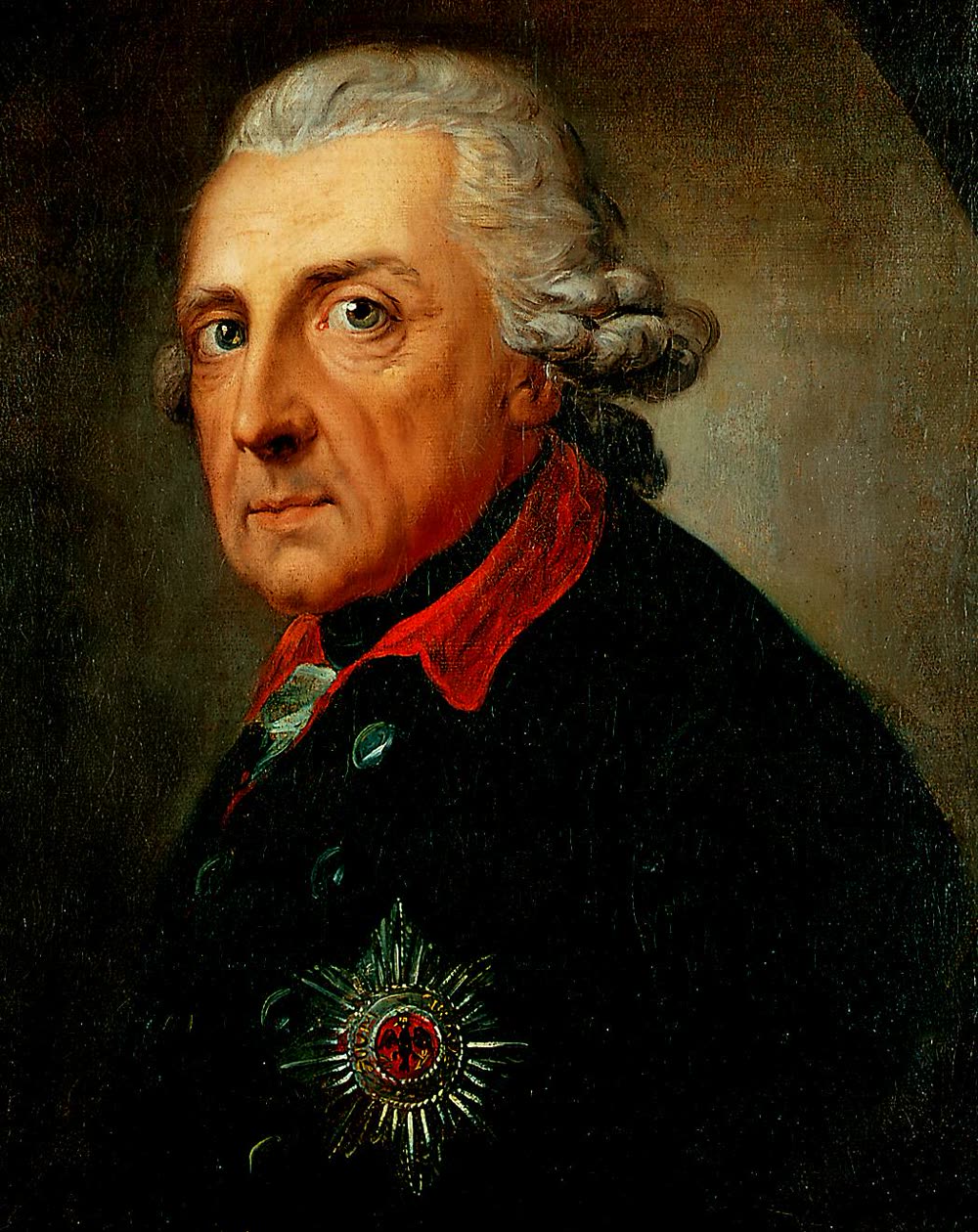
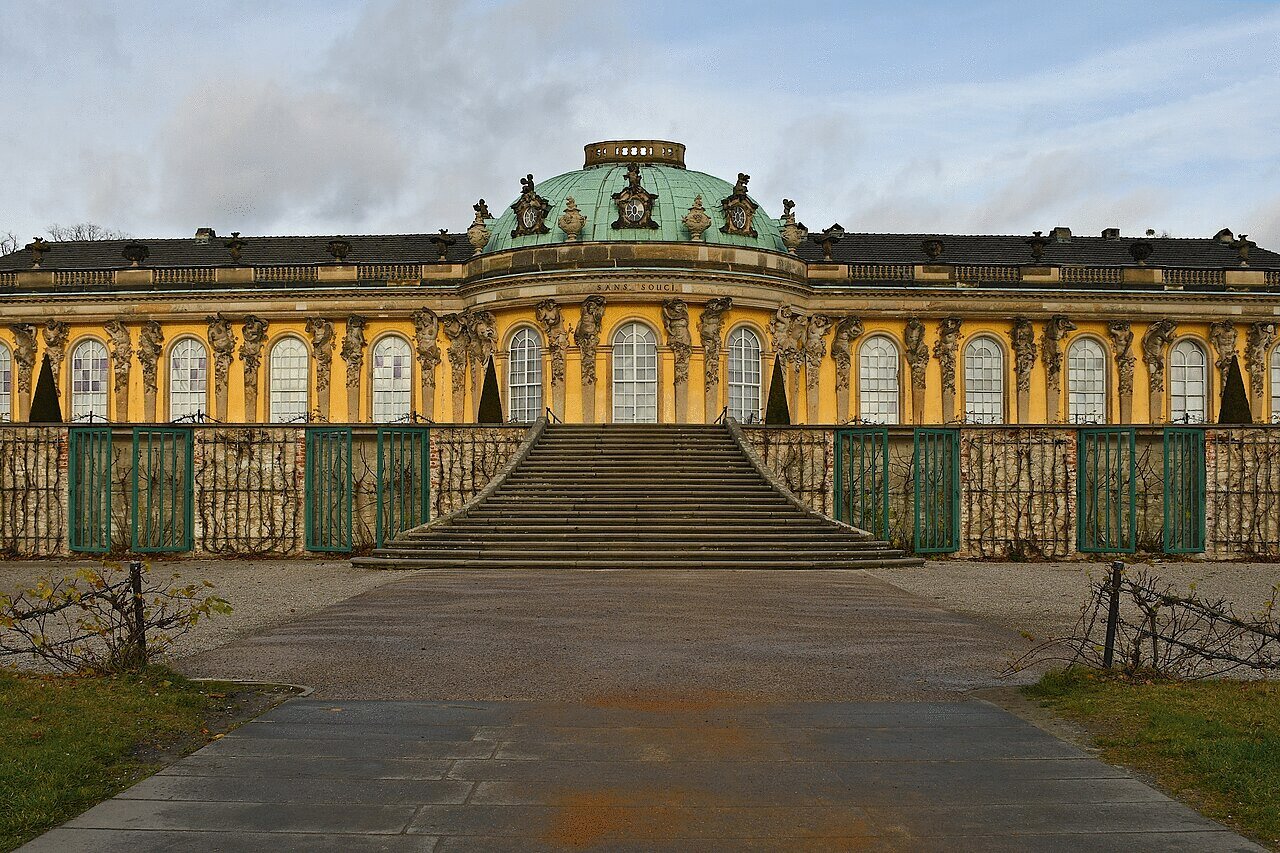
Frederick II (r. 1740-1786) gambled that inheritance within months of taking the throne, seizing the rich Austrian province of Silesia in 1740 and holding it through two decades of war. In the Seven Years' War (1756-1763) he survived against the combined weight of Austria, Russia and France - at moments by the narrowest of margins - and emerged with Prussia confirmed as the only serious German rival to Austria. In 1772 Prussia joined Russia and Austria in the first partition of Poland, extinguishing Polish independence for over a century. By Frederick's death in 1786 the kingdom's population had nearly tripled to 5.8 million, and its army, bureaucracy and work ethic were the most efficient in Europe.
Twenty years later the machine broke. In 1806 Napoleon shattered the Prussian armies at Jena and Auerstedt in a single day, took Berlin, and reduced the kingdom to a French satellite inside the Continental System until 1813. Prussia's answer was to rebuild itself from the ground up: the Stein and Hardenberg reforms abolished serfdom, opened the civil service to talent, founded new universities and created a modern army. When Europe rose against Napoleon, Prussia led the wars of liberation - Leipzig in 1813, Waterloo in 1815 - and emerged at the Congress of Vienna as a leading power of the new German Confederation, its western provinces on the Rhine soon to become the industrial heartland of the Ruhr.
In the nineteenth century Prussia's destiny became Germany's. Its customs union, the Zollverein of 1834, bound the German states to Berlin economically decades before any political union; its industry and railways outgrew every rival; and from 1862 its minister-president Otto von Bismarck delivered unification by 'blood and iron': war with Denmark in 1864, the crushing defeat of Austria in 1866, and the victory over France in 1870-71 that ended with the King of Prussia proclaimed German Emperor in the Hall of Mirrors at Versailles. Prussia was one of the empire's four kingdoms, but it held about two-thirds of its population and territory, and its minister-president was also the imperial chancellor - Prussia was imperial Germany. The kingdom died with the empire it created: in the revolution of November 1918 the monarchy fell and Prussia became a Free State of the Weimar Republic. The state that had risen in three centuries from a Baltic duchy to the maker of Germany vanished into the greater Germany it had made.
 Britannica: Prussia
 Humanities LibreTexts: 10.4: Prussia
 National Geographic: What’s So Great About Frederick? The Warrior King of Prussia
Britannica: Frederick I