 Go Back

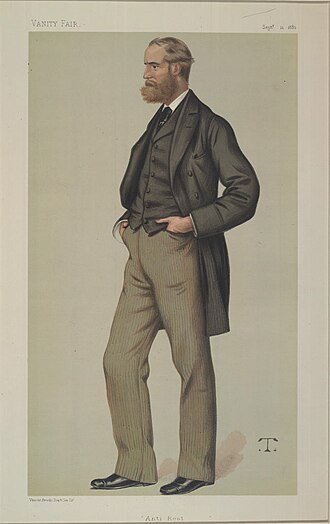
The Land War. Ireland in 1879 was a country of tenants: nearly all the land belonged to a few thousand landlords, mostly Protestant, many absentee, and the three million people who worked it had no legal right beyond the year's lease. When the harvest failed in 1879 and Famine memories woke, the west rose in a new kind of war - not for a republic this time, but for the land itself. The Irish National Land League, founded by Michael Davitt, a Fenian whose own family had been evicted, demanded the three Fs: fair rent, fixity of tenure, free sale.
The Land League's weapon was organized non-cooperation, and its chief victim gave the English language a new word: Captain Charles Boycott, a Mayo land-agent against whom the League perfected the social and economic ostracism that became the boycott. The movement's parliamentary arm was led by Charles Stewart Parnell, the cold, magnetic Protestant landlord who became the uncrowned king of Ireland, holding the balance at Westminster with a disciplined Irish party and using obstruction to force Ireland onto the floor of the House of Commons.
The government answered with coercion and the League answered with No-Rent manifestos; Parnell and Davitt were jailed in Kilmainham, and from prison came the Kilmainham Treaty of 1882: the prisoners released, the rent question settled by law. The pact was shaken within days by the Phoenix Park murders - the assassination of the new Chief Secretary by a splinter group - but the settlement held. Gladstone's Land Acts of 1881 and the later Wyndham Act of 1903 transformed Ireland: fair rents fixed by tribunals, then state-financed purchase, until the tenants of Ireland became owners of their farms.
Parnell did not live to see it. At the height of his power, with Home Rule seemingly won, he was destroyed by the O'Shea divorce case of 1890; the party split into Parnellite and anti-Parnellite, and he died broken in 1891, aged forty-five. But the Land War had already done its work: it had broken the landlords, created the class of owner-occupier farmers who would be the backbone of the Irish state, and shown that disciplined mass organization could win what rebellions could not.
 Britannica: Charles Stewart Parnell
Britannica: Michael Davitt
Britannica: Boycott