 Go Back

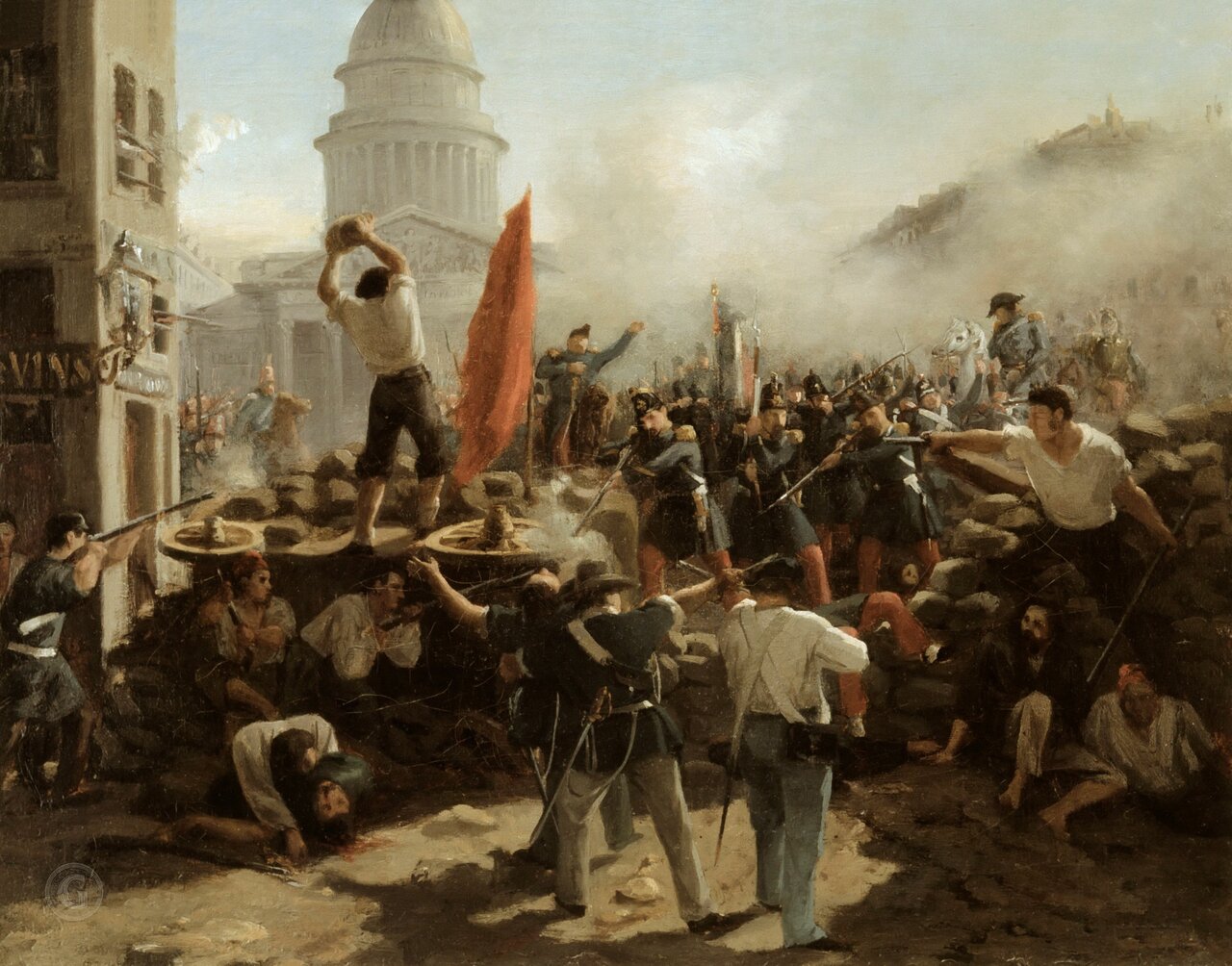
The Revolutions of 1848 were a wave of uprisings that swept across Europe, the most widespread revolutionary year in its history. Behind them lay economic crisis, the potato blight and harvest failures of 1845-1847, industrial slump and unemployment, combined with demands for constitutions, national independence and, in the west, wider suffrage. The spark came in France: in February 1848 the 'banquet campaign' against Louis-Philippe's corruption brought down the July Monarchy in three days of Paris barricades, and the Second Republic was proclaimed, with national workshops for the unemployed and universal male suffrage.
The fire spread within weeks. In Vienna, students and workers drove Metternich himself into exile (March 1848); Hungary under Kossuth won a constitution from the frightened emperor; Czechs, Croats, Romanians and Italians of the empire asserted their own national claims. In Berlin, Frederick William IV of Prussia, after street fighting, promised a constitution, and a German National Assembly gathered in Frankfurt to write one for a united Germany. In Italy, Milan expelled the Austrians in the Five Days, Venice declared a republic, and Piedmont-Sardinia went to war for Italian independence, while the pope fled Rome, where Mazzini's Roman Republic was proclaimed in 1849.
The revolutions then divided and were crushed one by one. In France, the June Days (1848) saw the army and provincial militias massacre the Parisian workers after the workshops were closed, and in December Louis-Napoleon Bonaparte was elected president, ending as emperor in 1852. In the Habsburg lands, the army retook Vienna (October 1848) and Prague, the new emperor Franz Joseph abolished the March constitution, and Hungary's full declaration of independence was destroyed in 1849 by Austrian and Russian armies, Russia intervening to save the monarchy. The Frankfurt Parliament, after a year of debate, offered the German crown to Frederick William IV, who refused to 'pick up a crown from the gutter'; the assembly dissolved, and Prussian troops finished off the last risings. In Italy, Austria defeated Piedmont at Custoza (1848) and Novara (1849), and France restored the pope by taking Rome.
The revolutions failed almost everywhere in their immediate aims, but 1848 changed Europe permanently. Serfdom was abolished for good in the Austrian Empire; universal male suffrage, though abused, had come to France; constitutions survived in Prussia and Piedmont; and the movements for German and Italian unity learned to look not to assemblies but to 'blood and iron' and Cavour's diplomacy, achieving within a generation by war and statecraft what the revolutionaries of 1848 could not. Marx and Engels, whose Communist Manifesto appeared as the revolutions began, drew the lesson that would feed the socialist movements of the next century.
 Britannica: Revolutions of 1848
 Encyclopedia.com: Revolutions of 1848