 Go Back

The Revolution of 1905 was Russia's first great revolutionary crisis, the 'dress rehearsal', as Lenin called it, for 1917. Its causes lay in the contradictions of the tsarist autocracy: a rapidly industrializing economy and an oppressed working class living in squalor, land-hungry peasants, restive national minorities on the empire's edges, and an intelligentsia excluded from political life, all ruled by Nicholas II, a weak tsar committed to unlimited autocracy. Defeat in the Russo-Japanese War (1904-1905) exposed the regime's incompetence to the world, and on 22 January 1905 the crisis broke: troops fired on a peaceful procession of St Petersburg workers marching with icons and petitions to the Winter Palace, led by the priest Father Gapon. 'Bloody Sunday' killed hundreds and destroyed the myth of the benevolent tsar.
The empire erupted. Strikes spread from city to city, a general strike in October paralyzed the railways; peasants burned manor houses; mutinies shook the armed forces, most famously on the battleship Potemkin in Odessa in June; soviets, workers' councils, appeared for the first time, the St Petersburg Soviet led briefly by the young Leon Trotsky; and from Poland to the Caucasus the non-Russian peoples rose. Every strand of opposition, liberal zemstvo men demanding a constitution, Socialist Revolutionaries among the peasants, Marxist Social Democrats, national movements, surged at once against the autocracy.
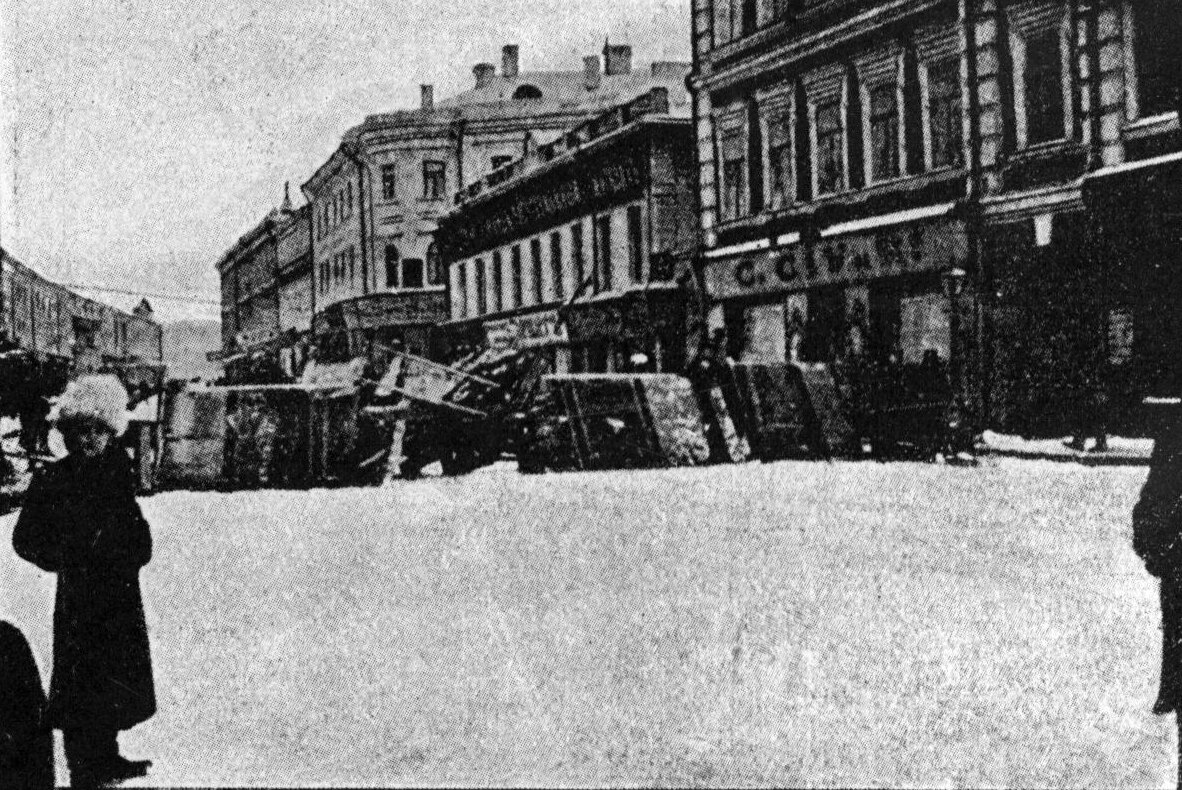
Faced with the general strike and a still-unreliable army, Nicholas II conceded: the October Manifesto (30 October 1905) promised civil liberties and an elected parliament, the State Duma, with legislative powers. The concession split the opposition: liberals accepted and went home, workers and socialists fought on, and in December the Moscow Soviet's armed uprising was crushed by artillery in the streets of Presnya. With the army loyal and the regime's enemies divided, the government regained control through 1906, backed by pogroms against Jews and revolutionaries, field courts-martial and mass arrests, the 'Stolypin necktie' of the gallows.
The Fundamental Laws of April 1906 then hollowed out the promised constitution: the tsar kept control of the army, foreign policy and ministers, and could dismiss the Duma at will. Four Dumas were elected on ever-narrower franchises, and Stolypin's agrarian reforms tried to build a class of loyal peasant proprietors while thousands of revolutionaries went to Siberia or exile. The 1905 revolution failed, but it had shown that the autocracy could be shaken: the soviet was invented, the parties were battle-tested, and the workers and soldiers who made 1905 would make February and October 1917.
 Britannica: Russian Revolution of 1905
Britannica: Decembrist