 Go Back

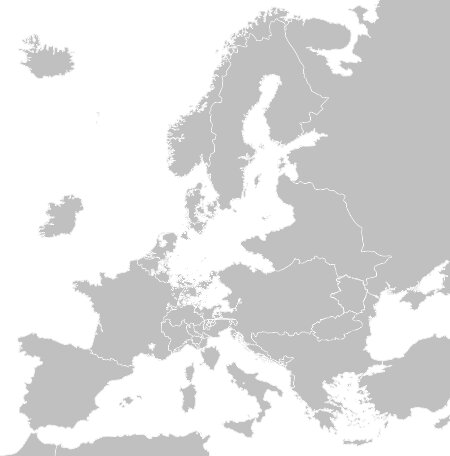
The Papal States entered the modern era as one of Europe's oldest political bodies, territories across central Italy ruled by the popes as temporal sovereigns since the eighth century. The wars of the French Revolution shattered their world: French armies occupied Rome twice, carried off Pope Pius VI as a prisoner in 1798, and annexed the Papal States outright in 1809, imprisoning Pius VII after he excommunicated Napoleon. The Congress of Vienna (1815) restored the pope's lands almost intact, and for the next half century the papal government, administered by clerics, guarding against secret societies, railways and modern political ideas alike, became the byword of conservative reaction in Europe.
Italian unification destroyed the temporal power piece by piece. The revolutions of 1848 drove Pius IX from Rome; the Roman Republic of Mazzini and Garibaldi ruled until French troops restored him in 1849. In 1860 the armies of Piedmont-Sardinia annexed the Romagna, the Marches and Umbria, leaving the pope only Rome and its countryside, defended by French bayonets and Catholic volunteers. When France withdrew its garrison during the Franco-Prussian War, Italian troops breached the Porta Pia on 20 September 1870 and took Rome, which became Italy's capital. Pius IX refused the Italian government's Law of Guarantees, declared himself 'prisoner of the Vatican', and forbade Catholics, under the non expedit, from taking part in Italian political life.
The 'Roman Question' festered for decade after decade. Successive popes never set foot outside the Vatican walls, the non expedit kept faithful Italians out of national politics, and every Italian government maintained the unanswered Law of Guarantees. The First World War, fought between Catholic Austria and Italy, sharpened the isolation: Benedict XV's peace note of 1917 was ignored by the belligerents, and the new pope Pius XI, elected in 1922, set about rebuilding the Church's missions - and looking for a way to end the quarrel with Italy.
By 1924 the standoff had lasted fifty-four years: the pope sovereign over a palace and a garden, Italy's capital seated in the city the popes still claimed, and no settlement in sight - though discreet contacts had begun. The Roman Question had shaped two generations of Catholic politics, from the culture wars of Bismarck's Germany to the anticlerical laws of republican France, and it remained, as it had been since 1870, the open wound of the Italian state.
 Britannica: Papal States
New World Encyclopedia: Papal States