 Go Back

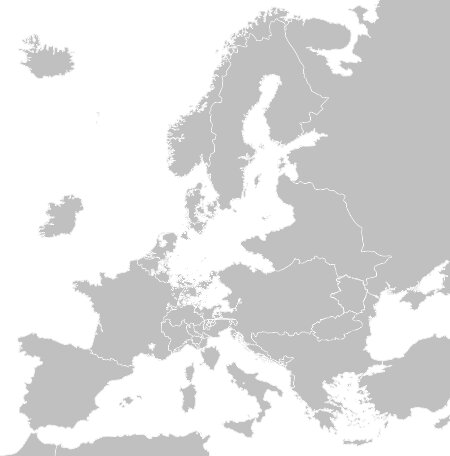
The Papal States entered the modern era as one of Europe's oldest political bodies, territories across central Italy ruled by the popes as temporal sovereigns since the eighth century. The wars of the French Revolution shattered their world: French armies occupied Rome twice, carried off Pope Pius VI as a prisoner in 1798, and annexed the Papal States outright in 1809, imprisoning Pius VII after he excommunicated Napoleon. The Congress of Vienna (1815) restored the pope's lands almost intact, and for the next half century the papal government, administered by clerics, guarding against secret societies, railways and modern political ideas alike, became the byword of conservative reaction in Europe.
Italian unification destroyed the temporal power piece by piece. The revolutions of 1848 drove Pius IX from Rome; the Roman Republic of Mazzini and Garibaldi ruled until French troops restored him in 1849. In 1860 the armies of Piedmont-Sardinia annexed the Romagna, the Marches and Umbria, leaving the pope only Rome and its countryside, defended by French bayonets and Catholic volunteers. When France withdrew its garrison during the Franco-Prussian War, Italian troops breached the Porta Pia on 20 September 1870 and took Rome, which became Italy's capital. Pius IX refused the Italian government's Law of Guarantees, declared himself 'prisoner of the Vatican', and forbade Catholics, under the non expedit, from taking part in Italian political life.
The 'Roman Question' festered for nearly sixty years. The popes never left the Vatican, Italy never accepted their protests, and the conflict embittered relations between church and state across the Catholic world. The settlement came from an unexpected partner: Mussolini, who needed Catholic legitimacy for his fascist regime. By the Lateran Treaty of 11 February 1929 the papacy recognized the Kingdom of Italy, and Italy recognized Vatican City as a sovereign independent state of 44 hectares under the pope's absolute rule, with a financial indemnity for the lost territories and a concordat making Catholicism the state religion. The smallest state in the world was created to end the longest church-state quarrel in Europe.
Vatican City in the twentieth century navigated dictatorship and world war: Pius XI protested against both fascist racial laws and communism, and Pius XII's wartime silence on the Holocaust remains one of the most debated papacies in history. The Second Vatican Council (1962-1965) under John XXIII and Paul VI transformed the church's relations with the modern world, and John Paul II, a Pole, used the Vatican's moral standing to help bring down communism in eastern Europe. Today the Vatican remains a sovereign entity, issuing its own stamps and passports, guarding its diplomatic service, the Holy See, one of the oldest and most widely connected in the world, while the popes, temporal rulers of almost nothing, exercise an influence no territorial power could buy.
 Britannica: Papal States
New World Encyclopedia: Papal States