 Go Back

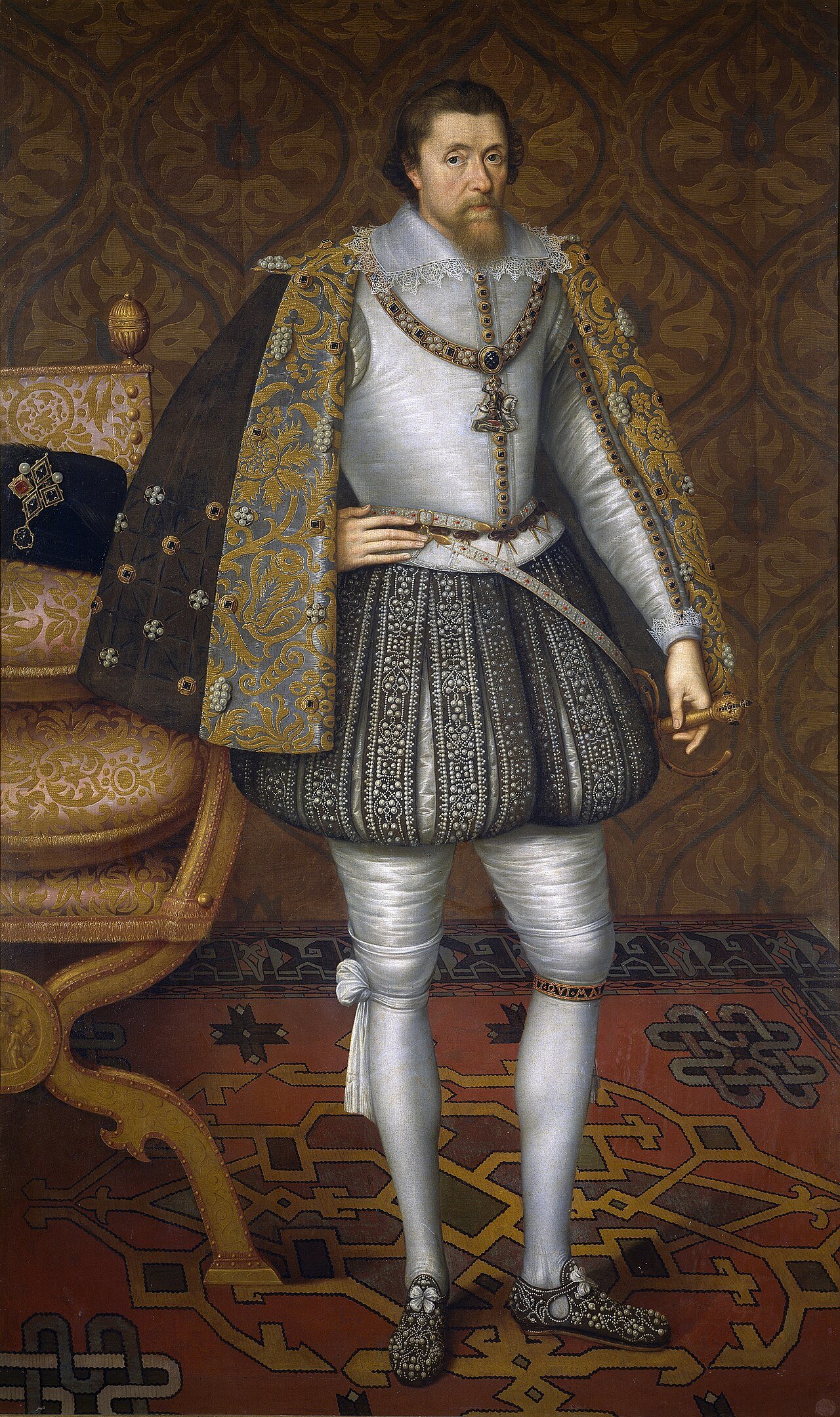
The Union of the Crowns. In the last hour of 24 March 1603 Elizabeth I died at Richmond, and before dawn Sir Robert Carey was riding hard for Scotland with the news. At Holyrood, King James VI of Scots - son of Mary, Queen of Scots, and great-great-grandson of Henry VII - learned that he was now James I of England as well. It was the union England and Scotland had fought over for three hundred years, achieved in an instant by inheritance: the crowns of the two ancient enemies joined on one head, and the Stuart dynasty seated in London.
James rode south to a rapturous welcome and quickly found that two crowns were not one kingdom. He proposed himself King of Great Britain and asked both parliaments for a full union - one law, one church settlement, free trade, one citizenship. Both refused: England would not share its laws or its trade with the poorer Scots, and Scotland would not be absorbed. The union of 1603 remained personal, not political: two kingdoms, two parliaments, two established churches, one king. James had to content himself with a flag - the first Union Jack - and a Bible, the King James Version of 1611, sponsored to bind his two peoples in one scripture.
The divided inheritance stored up trouble. The Stuarts were now absentee kings of Scotland, governing it through bishops and favorites from London, and absentee landlords of Irish plantations. The attempt of James's son Charles I to force English-style worship on Presbyterian Scotland would provoke the Bishops' Wars, and the Bishops' Wars would light the fuse of the English Civil War: the three kingdoms could no longer be pulled apart, and they dragged one another into the wars of the 1640s.
Still, 1603 settled the great question of the island: never again would England and Scotland make war as sovereign enemies. For a century the union of crowns worked awkwardly, until the Act of Union of 1707 made it a union of parliaments - and the kingdom James had wanted, Great Britain, finally came into being.
 Britannica: James I
Britannica: King James Version
Britannica: Act of Union (1707)